
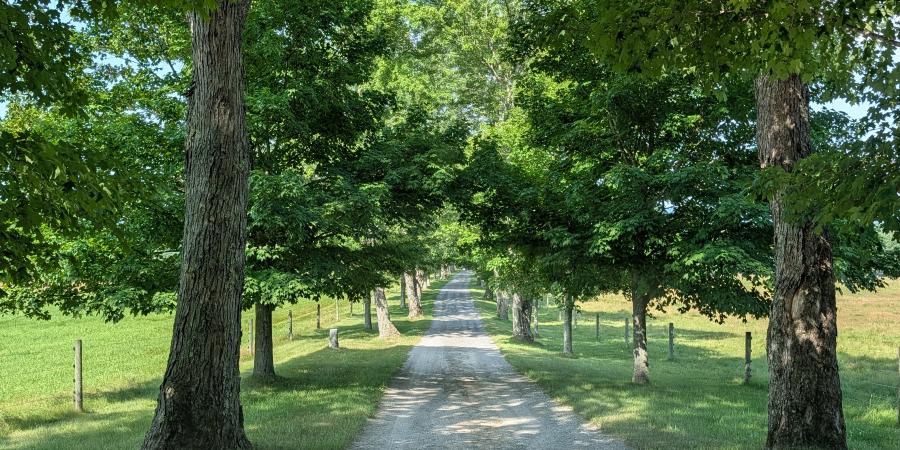
Ausable Freshwater Center is proud to partner with the Lake Champlain Basin Program to provide free Stream Wise assessments in the Adirondack region of the Lake Champlain Basin. This voluntary program provides the opportunity for property owners to have the riparian buffers on their land evaluated by experts. The Stream Wise program rewards well shaded, adequately vegetated, and undisturbed land within 50 feet of streams and rivers (aka a buffer) with a Stream Wise Award for Best Management Practices in a Vegetated Stream Buffer. Importantly, the program also provides practical guidance for landowners looking to improve the health of their riparian buffer.
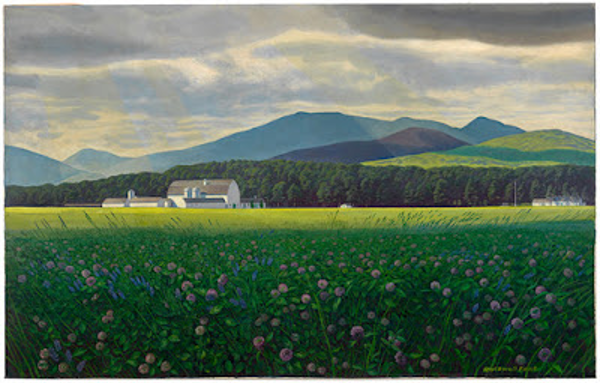
Cloverfields, 1939-1940, Rockwell Kent
On July 27th, 2026 a request for an assessment brought us to Aasgard Farm in Ausable Forks. This beautiful dairy farm has the unique history of being built and operated by American artist and adventurer, Rockwell Kent. He spent the latter half of his life there, from 1927-1971, and painted many landscapes of its gorgeous surroundings. David Brunner and Rhonda Butler acquired the farm in 1988 and got it operating as a farm again in 2003.
Our Stream Wise team met up with David and Rhonda on their front porch where they offered us some coffee and we chatted a bit about the property and its history. Looking over a map together, we decided to start our assessment by checking out the headwaters of the stream we were assessing. David generously brought us up old logging roads in his electric 4-wheelers. On the ride, we kept our eyes peeled for both native and invasive plants, taking note of each new species we saw. The stream began at a beautiful little bog and we took a moment to listen to the songs of frogs and birds before heading downstream.
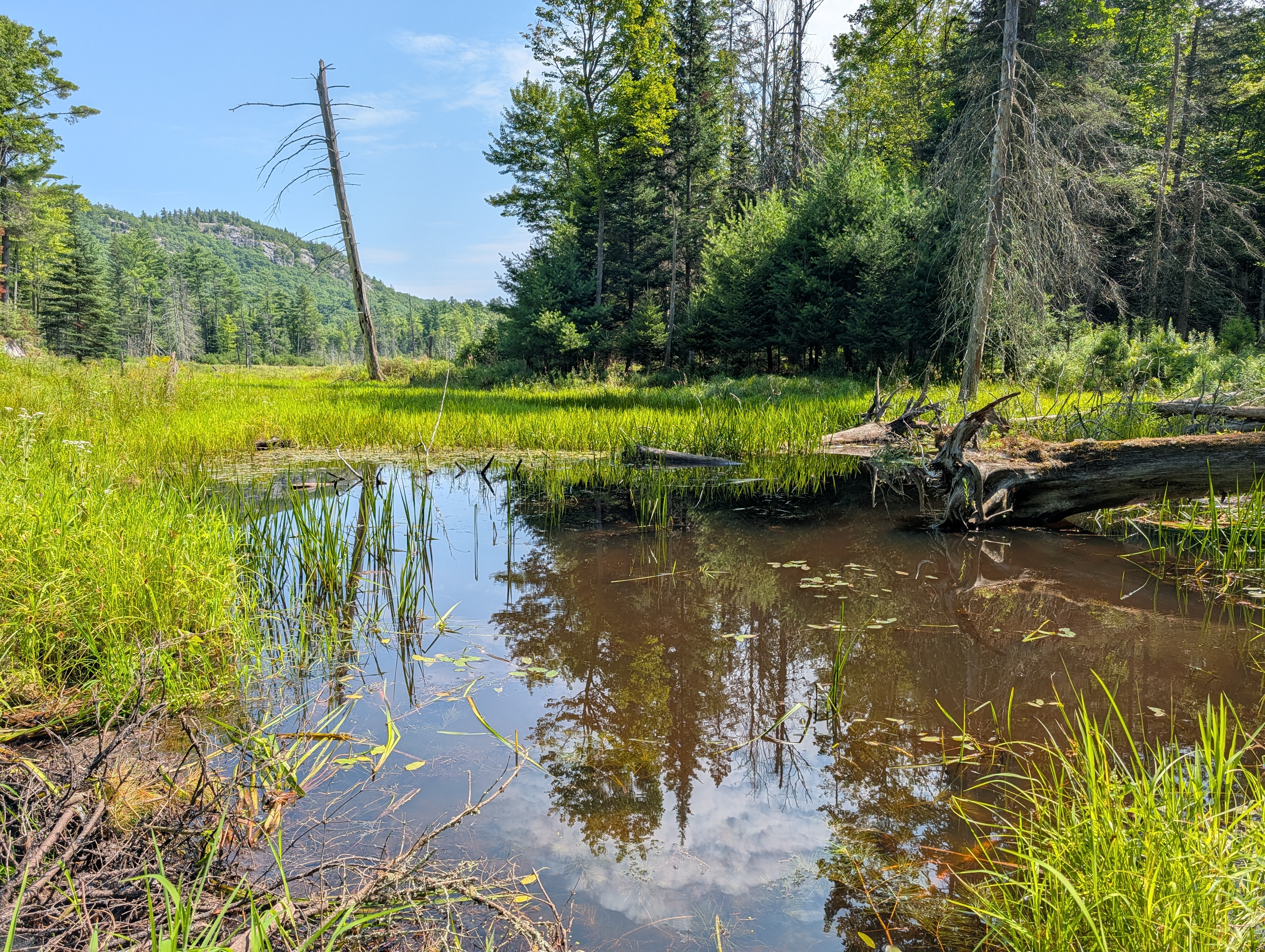
Bog & headwaters of stream at Aasgard Farm
The landowners had expressed concern about an old dam and a small bridge in the downstream sections of the property. Rhonda led the way, giving us a good view of both. Our team found the site of the old dam is only slightly more narrow than the natural stream channel and contains a healthy amount of downed wood and other plant matter. The banks in the region of this stretch of stream are forested and healthy. The remnants of the dam do not appear to be impeding the stream.
The small wooden bridge Rhonda showed us creates a crossing point over the stream between two farm fields. The land slopes somewhat steeply down to the stream edge on both sides. Sometime in the past, streamco willow had been planted with the aim of preventing erosion and improving the overall health of the buffer in that exposed area of the stream. Those willows have started to look a bit worse for the wear and we were able to provide some suggestions for improvement, including pruning and adding some native willows and other stream-loving shrubs to grow up in succession.
Support our biodiverse habitats work for wildlife and their habitats. Give with confidence today!

Rhonda returned to her chores and left our team to finish up the assessment. Prior to arriving, we had conducted a GIS Stream Wise desktop assessment of the stream buffer. This tool allowed us to get a sense of the buffer width and where it might be narrow, any development, impervious (buildings, paved driveways) or pervious (mowed lawns) surfaces that might be within the buffer, and the presence of any wetlands or floodplains on the property. The area with the Streamco willow was of the most concern to us, as we could see the vegetated area within the buffer was not very large.
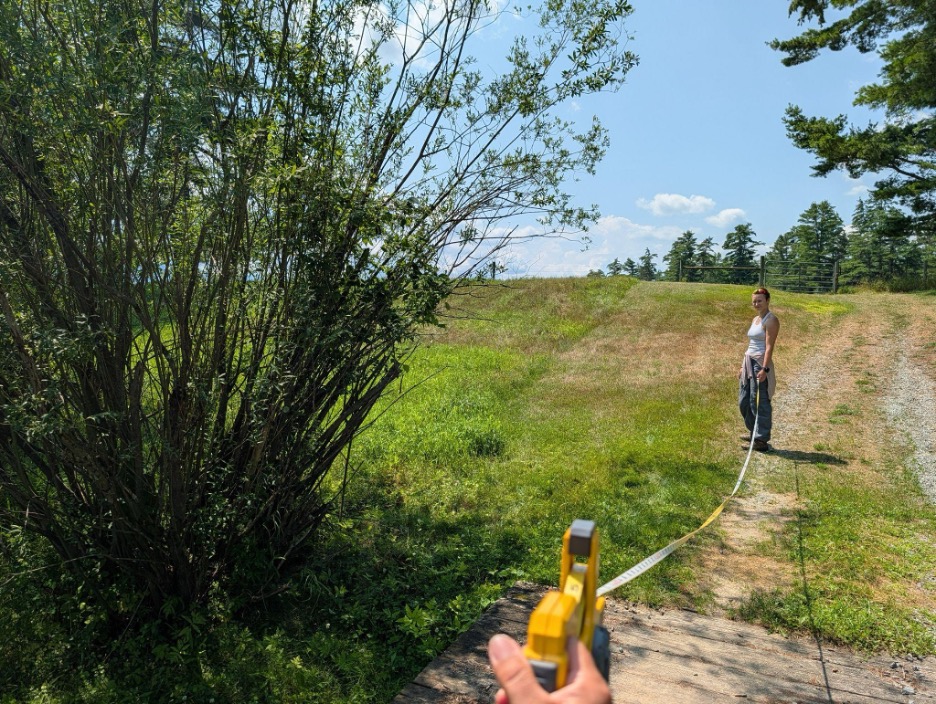
River Steward Ellen and Stewardship Manager Marque taking a buffer measurement.
While on site, we took measurements and photos and discussed what could be improved. One of the easiest approaches a landowner can take is to stop mowing as close to the stream. This will give more plants a chance to grow. Additionally, the landowners can look into planting some more native shrubs and trees in the sparse section to help develop a more robust buffer.
Overall, this property as a whole is doing a very good job with their riparian buffer. We were pleased to provide positive comments to the landowners before we said our goodbyes and headed home to work on the report, which will provide David and Rhonda’s with all of our findings, a list of notable plants in their buffer, and guidance for any changes they can make to improve the health and stability of their stream, stream banks, and buffer zone.
Do you have a stream/riverside property you would like assessed? Our 2026 season has come to an end, but you can reach out to contactus@ausablecenter.org to get on the list for next season’s Stream Wise assessments!
Story by Ellen Lansing, 2026 River Steward.
Sign-up for our e-newsletter to get weekly updates on the latest stories from the Ausable Freshwater Center.

