
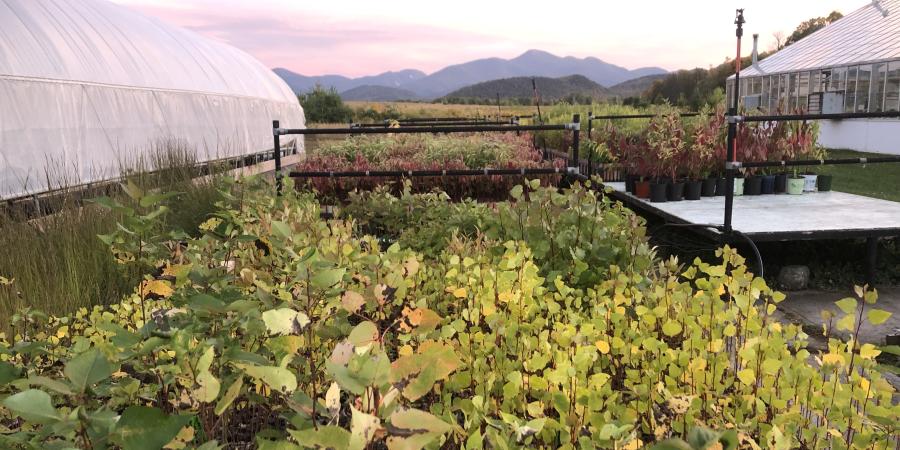
Tree planting is increasingly used as a tool to build climate resilience in the Northeast. Reforestation and afforestation have proven effective in environmental mitigation, restoration, and adaptation. However, the Northeast, including New York, is experiencing a shortage of native stock grown in the region, creating a demand for native tree production. The Ausable Freshwater Center knows all too well the difficulty of sourcing local, native stock for its restoration projects. In response to this demand, it launched the Ausable Conservation Nursery in 2024 as a source for reliable, hyperlocal plants for restoration projects in the Adirondack region and beyond.
While convenient and sometimes necessary because of the current native plant stock shortage, sourcing trees for planting projects from distant nurseries can have an environmental impact. When trees are grown far from where they'll eventually be planted, they may not be genetically adapted to local soil, climate, or weather extremes, making them more vulnerable to stress and disease. Transporting trees long distances also carries risks, such as pests, pathogens, and invasive species that can hitchhike in soil or plant material, spreading problems to new ecosystems. Beyond that, shipping large quantities of trees across regions increases a project's carbon footprint and drives up the total cost for plant stock. In contrast, sourcing locally grown native stock supports healthier, more resilient plant communities, reduces biosecurity risks, and keeps restoration money in our local economies.
Support the Ausable Conservation Nursery. Give with confidence today!

How do we choose species for restoration?
The Ausable River watershed encompasses a remarkable range of microclimates, from the mouth of the river, where the warm waters of Lake Champlain can keep killing frosts at bay until early December, to its lofty headwaters in the High Peaks, where frosts are expected every month of the year. The glacial sandy deposits are traces of a time gone by, and the plants that call this watershed home have spent millennia evolving alongside the Ausable’s mighty flow. The ancestors of these native trees and shrubs have withered in years-long droughts, drowned in weeks-long floods and felt the heavy hand of human management. Suffice to say, the native plants that call the Ausable watershed home today are the most resilient and readily available species for riparian restoration. But given the watershed's incredible range of climates and our relatively constrained set of resources, how do we discover which riparian species are best adapted for restoration?
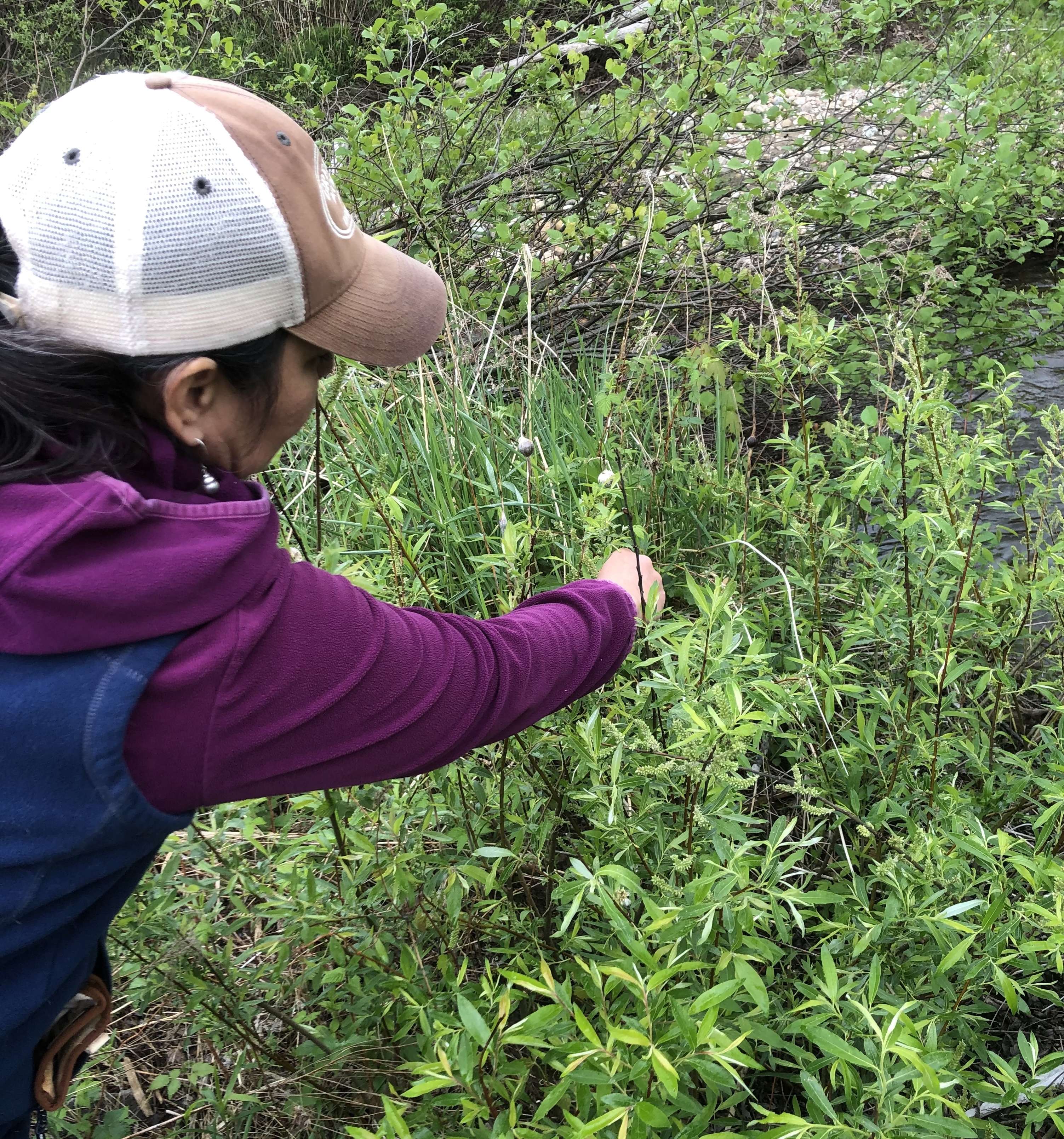
AFC staff spend time in the field identifying and inventorying native genotypes for seed collection and research.
In 2019, AFC began to tackle this question by studying the abundance of riparian plant species at select sites along the Ausable River. Almost twenty sites were chosen for research based upon their similarities to planned restoration sites. At sites prone to flooding and ice scour, our biodiverse habitats team and Stephen Langdon, a local botanist and ecologist, conducted botanical inventories of all grasses, flowering plants, and woody trees and shrubs. From the headwaters to the river’s mouth,184 vascular plants were identified amongst the sites, with 155 being native species and 29 non-native or naturalized. While entire plant communities were documented, our team whittled down the data until we had a list of the 10 most abundant plants growing at these highly disturbed riparian sites. Interestingly, species abundance was slightly different above and below elevations of 1,000 feet. Given this study, the team decided to create two separate top-ten species abundance lists, one for higher elevations and one for lower elevations. These lists allowed us to home in on species choice for our riparian plantings at restoration sites, to ensure we could choose plants that would thrive on the new banks or culverts we were constructing through our restoration projects. Despite elevational differences, the survey data showed a strong preference for the following five species of riparian plants in the Ausable watershed: red maple (Acer rubrum), red osier dogwood (Cornus sericea), silky dogwood (Cornus amomum), silky willow (Salix sericea), and Bebb’s willow (Salix bebbiana). The sheer abundance of these five species in the Ausable watershed indicated that our planting efforts should be focused on these species, as we hypothesized they would have the highest chances of survival in restoration sites because of the abundance of genetic diversity in the native population as well as their adaptability across the watershed.
Monitoring restoration sites after planting is another way that AFC stays informed about species success and affects our species selection process. Regular monitoring helps identify early challenges like poor survival rates, erosion, frost heaving, or browsing pressure, allowing for quick adjustments and maintenance before minor problems become big ones. It also helps track long-term ecosystem changes, such as how vegetation grows, how soils stabilize, and how wildlife returns after restoration. By collecting data year after year, we can refine our methods, share lessons learned, and ensure that each project contributes to healthier, more resilient landscapes. In short, planting is just the first step; monitoring is how we make sure that investment in restoration is long-lasting.
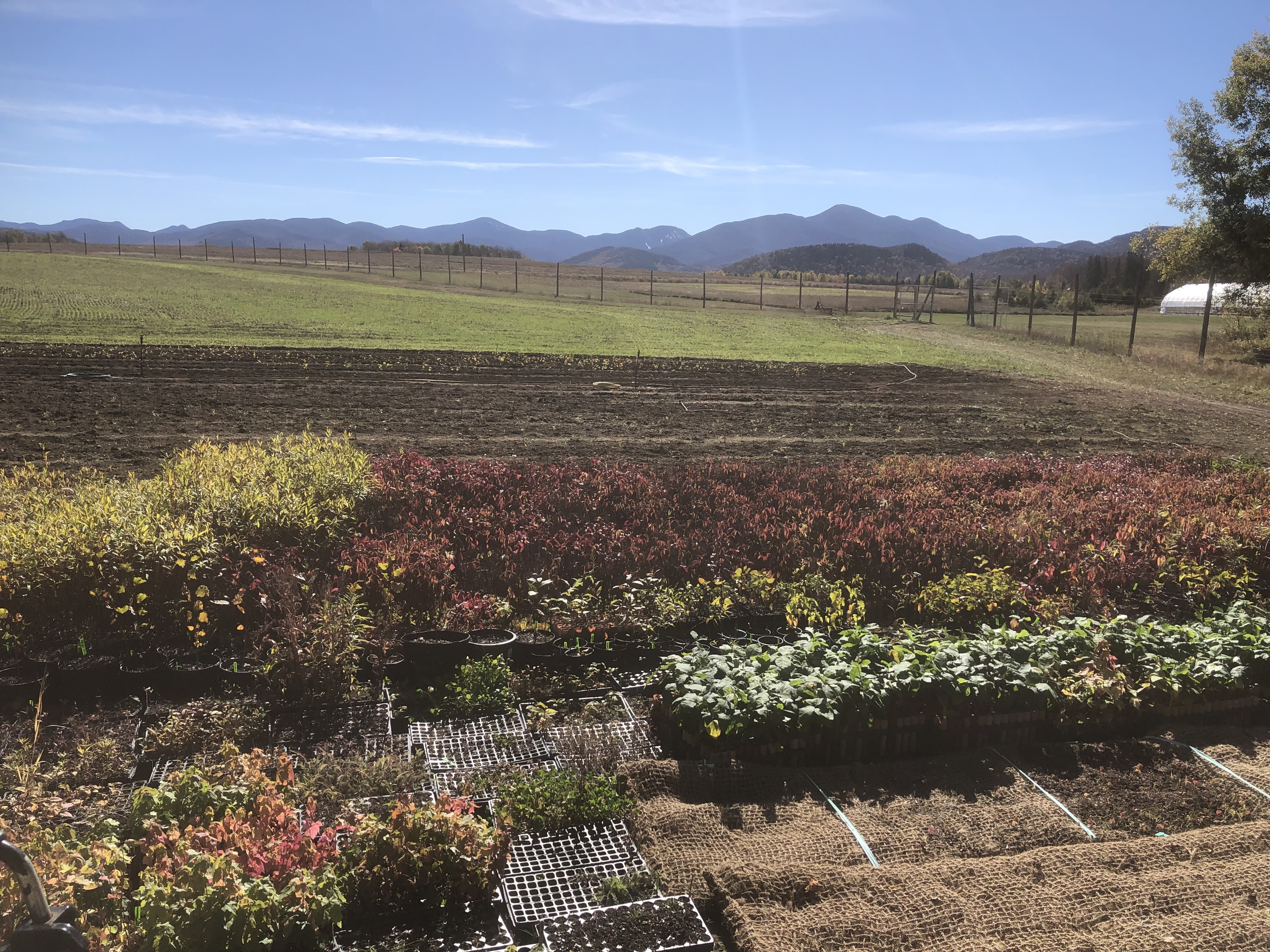
Native plants grown at Ausable Conservation Nursery that will be grown as bareroot stock and eventually planted in the Ausable River Watershed.
As the nursery has progressed from its inception in 2024, the species list has continued to expand. The Ausable Conservation Nursery currently produces over 20 species, and our intention is to provide a higher diversity of species for planting projects. Our species list continues to be informed by our own research, as well as New York State’s reforestation initiatives, including the Collaborative Priority Species List for Reforestation in New York. This list aims to encourage suppliers to produce species that are expected to be in the highest demand, and serves as a guideline for restoration planting and potential markets for our plant stock.
Story by Kiana French, Nursery Curator.
Sign-up for our e-newsletter to get weekly updates on the latest stories from the Ausable Freshwater Center.

