
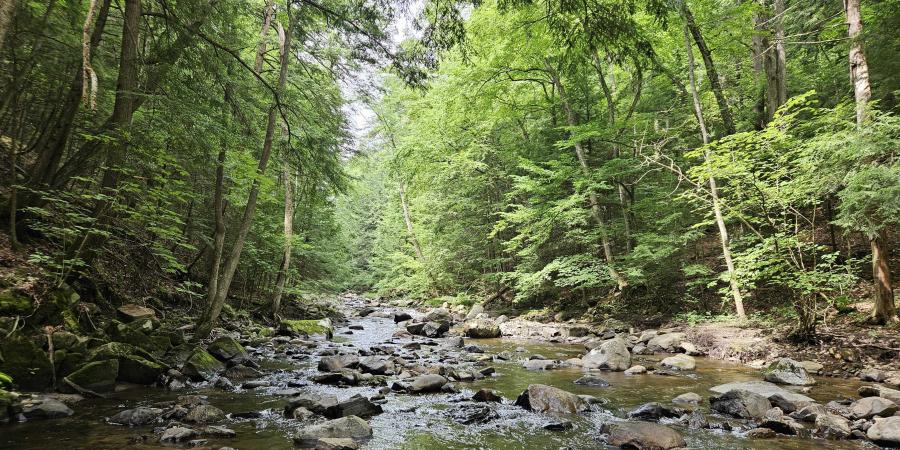
Healthy rivers and streams are built from a balance of structural, water quality, and biological conditions. Each fish, mussel, insect, and aquatic plant in the Ausable River and other Adirondack watersheds depends on specific habitat features to survive. By taking the time to consider what our endemic wildlife requires, both in the water and the water's surroundings, we can glean aspects of what habitat or natural state we are trying to restore. Our restoration projects are more likely to succeed if we are able to provide the building blocks for good habitats.
What makes aquatic habitat?
Habitat for a creature consists of shelter, food, water, and space. The physical and water quality (chemical) characteristics that form habitat includes channel shape, water velocity, a range of water temperatures, oxygen levels, flow patterns, and the physical materials that make up the streambed and banks.
Cold, well-oxygenated water supports a host of fish, such as brook trout, and aquatic larval insects, such as mayflies, caddisflies, stoneflies, and dragonflies. Mussels and crustaceans also thrive when these conditions are met. Flowing water provides oxygen and carries nutrients, while areas of slower current offer refuge from floods and drought. The mixture of gravel, cobble, boulders, and sand that line streambeds (the substrate) shapes how water moves and where species live. For example, fish and aquatic insects lay eggs in crevices between rocks. If fine sediment fills these spaces, it can smother eggs, clog gills, and reduce available habitat for each of the small organisms that live there.
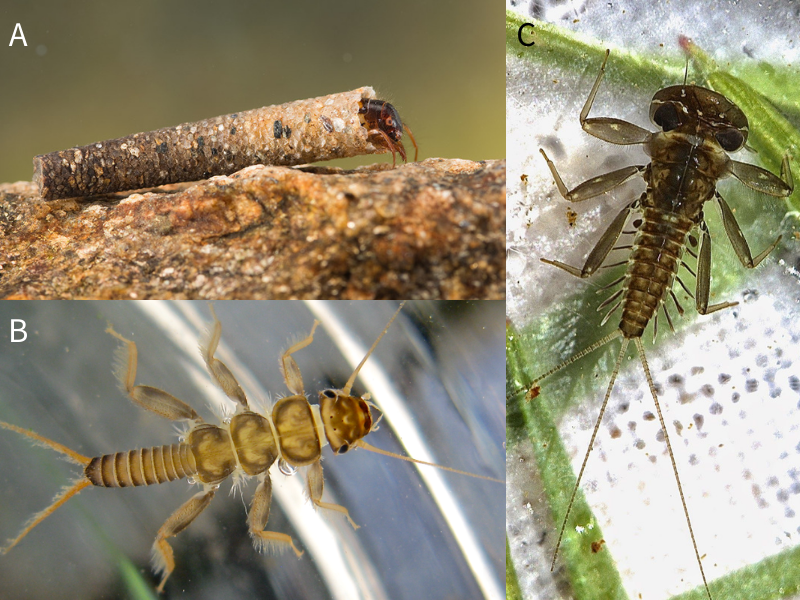
(A) caddisfly larvae, Trichoptera; (B) stonefly nymph, Plecoptera; (C) mayfly nymph, Ephemeroptera. Photos by Jan Hamrsky, Dave Huth, and Bob Henricks
The role of structure and shade
Just as trees and shrubs shape our landscapes on land, fallen wood, root wads, bottom substrate, and aquatic vegetation shape stream channels underwater. This structure adds complexity. It can work to create deep pools, shaded zones, and areas of refuge where fish can rest from the currents, conserve energy, and feed.
Large wood, sometimes called “woody debris,” may look messy to human eyes, but it’s essential to stream health. As we’ve learned from observing decades of restoration work around the country and in our own backyard, wood helps build habitat complexity and stabilize stream channels.
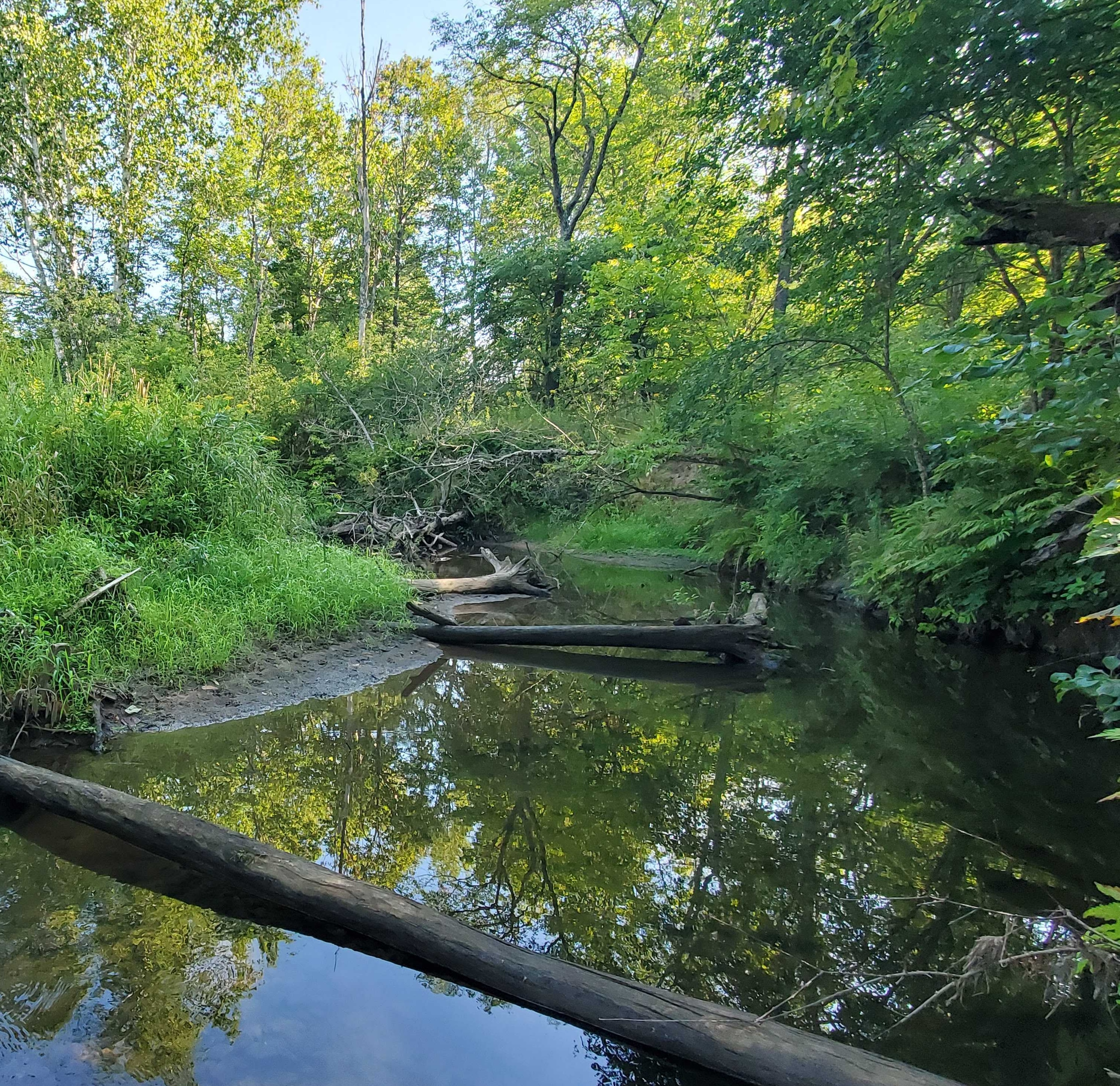
Wood in streams can add habitat complexity for aquatic species.
When a tree falls into a river, it slows water, collects gravel, and forms natural pools. The large tree stranded mid-channel with its roots buried in the deep channel, or the large limb laying against the bank with its branches in the water, adds complexity, or heterogeneity, to the aquatic habitat. Exposed portions above water provide basking areas for turtles and perches for birds and small mammals. Below the water, fish benefit in several ways. First, fine gravel typically collects upstream of large woody debris as flows slow, creating spawning habitat. As water flows over and around submerged tree limbs, it scours the bed and redistributes sediment. These processes keep rivers resilient and self-sustaining. The fallen tree helps feed the aquatic food chain from the bottom up. As it settles in place for the long term, wood provides a surface for algae to grow on and often traps smaller sticks, leaves, and other organic material: food sources for a variety of aquatic macroinvertebrates. Instead of being a barrier to fish passage, woody debris can make it easier for fish to move upstream. The complex habitat also provides shelter for fish to rest, reside, or feed during low flows in summer.
Support our biodiverse habitats work for wildlife and their habitats. Give with confidence today!

Of equal importance to underwater habitat heterogeneity are the living trees and shrubs that line our streambanks. The bands of native vegetation bordering rivers, called riparian buffers, shade and cool surface waters, filter pollutants from runoff, and anchor soil with their deep roots. Their leaves feed aquatic insects, which in turn feed fish and other wildlife. Thick buffers or floodplains, if they are connected to the river, have the ability to absorb flood waters.
More and more, it’s becoming clear that the interface between forest and stream ecosystems, so often treated separately, is critical to the health of both. For trout to thrive, they need suitable underwater habitat, including cool temperatures, a variety of aquatic insects and small fish to eat, and areas of cover to escape from predators and high flows. The best fish habitats have healthy adjoining forests or riparian buffers. These serve to shade the stream and cool water. When a strong riparian buffer is established, a double bonus comes in the form of excellent habitat for birds, pollinating insects, and habitat for more mammals and amphibians.
A delicate balance
The balance of conditions that support native aquatic species is increasingly under pressure. Increasing temperatures threaten cold water fish such as brook trout, which depend on stream temperatures below 68°F. Habitat fragmentation caused by undersized culverts and hardened banks prevents fish from reaching spawning or refuge habitat. Sediment from eroding banks fills in gravel beds and buries or chokes macroinvertebrates. Invasive species compete for food and space, altering long-established ecological relationships.
When populations of these groups of animals are healthy, it’s a good indication that the broader ecosystem is functioning. When their habitat is impacted by temperature spikes, when their living spaces fill with sediment, or the whole stream becomes fragmented by barriers, fish and other aquatic life quickly decline.
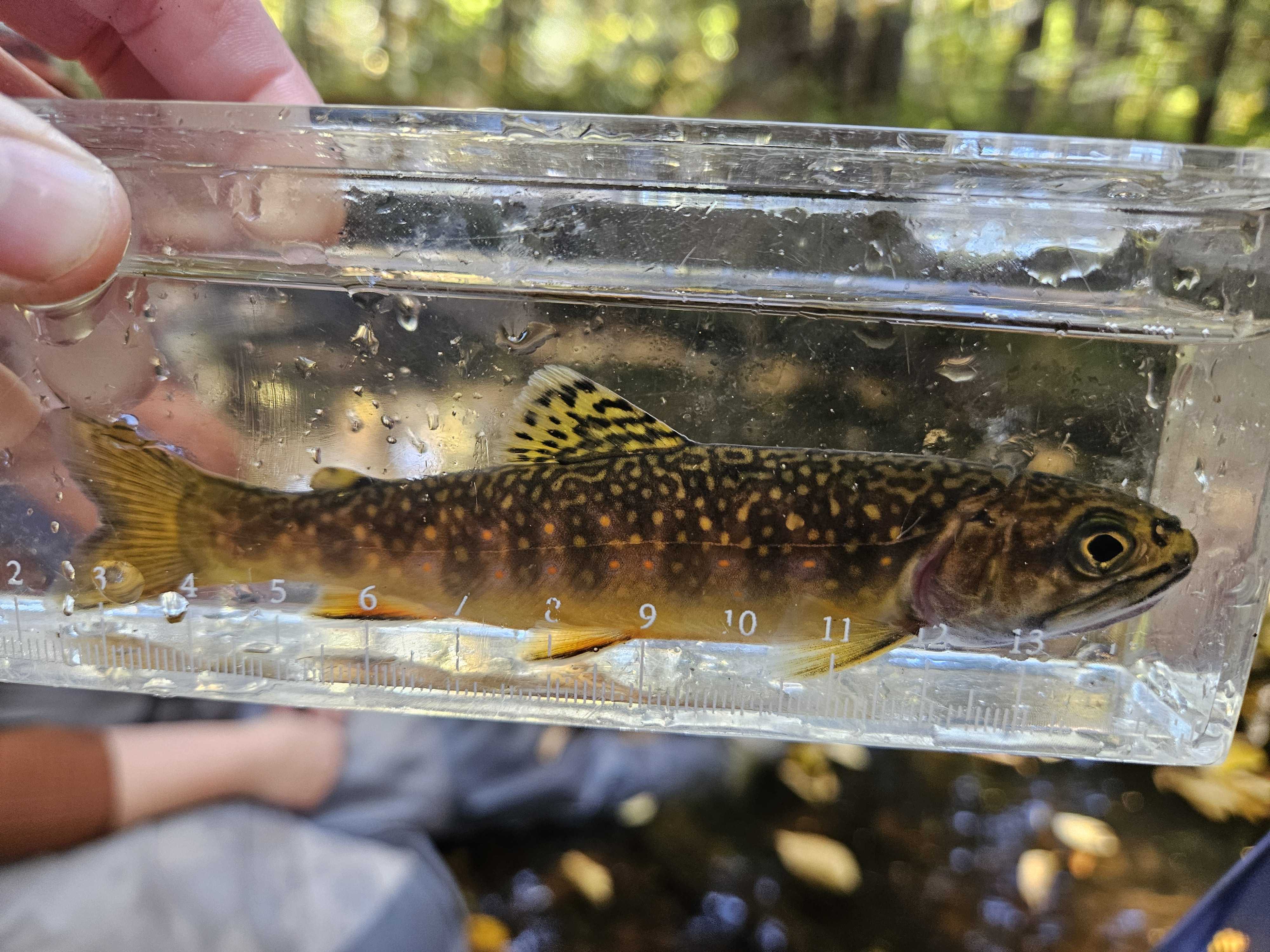
Brook trout, native to Adirondack streams and lakes, need cold, clean water. Their habitat is threatened by increasing water temperature, habitat fragmentation, and sedimentation.
The consequences ripple outward: fewer insects for trout to feed on, reduced spawning success, and a loss of resilience in the face of floods and drought. Because trout are sensitive to both temperature and water quality, their decline signals broader ecosystem stress. Protecting and restoring habitat conditions for our more sensitive species means protecting the conditions that sustain all life in the watershed.
For years, Ausable Freshwater Center staff members and volunteers have worked to restore our native riparian buffers, planting thousands of trees and hundreds of acres of grasses and shrubs along eroding or disturbed streambanks. Through this effort, we’ve learned that restoring habitat structure above and below the waterline is vital to supporting the full web of aquatic life.
More recently, we have been collecting fish and aquatic macroinvertebrates from several sites across the watershed. This will help us understand whether macroinvertebrate populations at our restoration projects change over time from the types of species you see at an unrestored, degraded site to those you might find in high quality “reference” reaches.
As we get to know our insects and sites, we learn that each species of aquatic macroinvertebrate has unique habitat requirements. Some require cold water while others like warm water. Some need lots of oxygen and others can tolerate low oxygen. Some require the most frigid, cleanest, freshest waters available, while others can tolerate slow water, and others can even tolerate different pollution levels or sedimentation in their habitats. Each species has habitat preferences for different river substrates, from mud to clean gravel.
Story by Carrianne Pershyn, Biodiversity Research Manager.
Sign-up for our e-newsletter to get weekly updates on the latest stories from the Ausable Freshwater Center.

