In the Aftermath of Hurricanes: A Reflection on Building Flood Resilience in Different Environments
We often say that climate resilience looks different here in the Adirondacks and it really does. Last week, Ausable Freshwater Center's (AFC) Executive Director, Kelley Tucker, and I attended events at New York City (NYC) Climate Week and saw firsthand the work being done to make the city more resilient to floods and major storms.
As AFC's new director of development, this was a wonderful opportunity to not only return to a place I lived and worked for a little over ten years but also see how the city has continued addressing climate change. NYC Climate Week is an annual event that was set up to connect the people and ideas shaping how we live, work, and build a low-carbon economy and a more secure future. It includes panel discussions, workshops, field studies, and films, with both in-person and virtual options available.
Remembering Sandy
When Superstorm Sandy hit NYC, I was living in the Inwood neighborhood on the northern point of Manhattan. Though my community didn't flood, I witnessed the destruction caused by flooding in other parts of the city firsthand. Having lived there during such a damaging storm, I was impressed by what I saw during the field study event I attended.
Seeing the destruction of Sandy firsthand made the field study event at Climate Week that much more impressive. Organized with the Rise to Resilience (R2R) Coalition and the New York State Adaptation Practitioners Network, the tour took our group to several sites, including Wagner Park in the Battery. Areas that were heavily impacted by flooding from Sandy have since been the focus of major investment and are now better prepared for the next significant storm.
Wagner Park
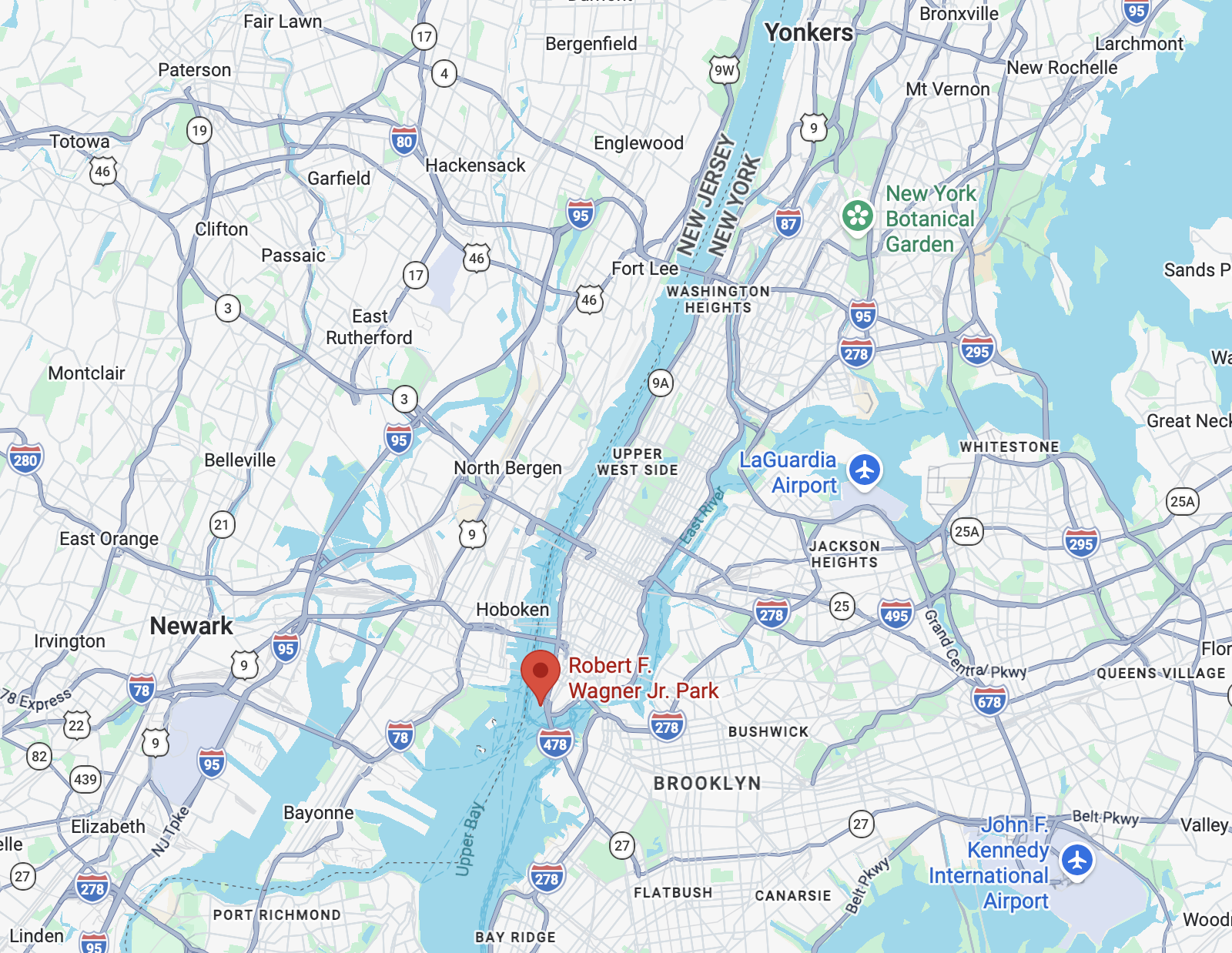
From its headwaters in the Adirondack Park, near the Ausable River, the Hudson River flows south to Manhattan, where Wagner Park sits at the island's southern tip with a view of the Statue of Liberty and New Jersey on the distant shore. While the park itself wasn't severely impacted by Superstorm Sandy, lower Manhattan experienced a record-breaking 13.8' storm surge that flooded the subways, tunnels, and ground-level infrastructure. That surge exposed just how vulnerable the city's low-lying edges were, and it prompted a redesign.
Central to the park's redesign is a full-scale flood protection system that combines permanent features with measures that can be put in place when needed. Once completed, it will immediately shield the area from a 100-year storm, meaning an intense weather event with a 1% chance of occurring in any single year. After another project, the North/West Battery Park City Resiliency Project, is built and linked to this one, the park will also withstand a 100-year storm in the 2050s, accounting for expected sea level rise. In addition, an improved stormwater drainage network will collect, manage, and repurpose rainwater effectively.
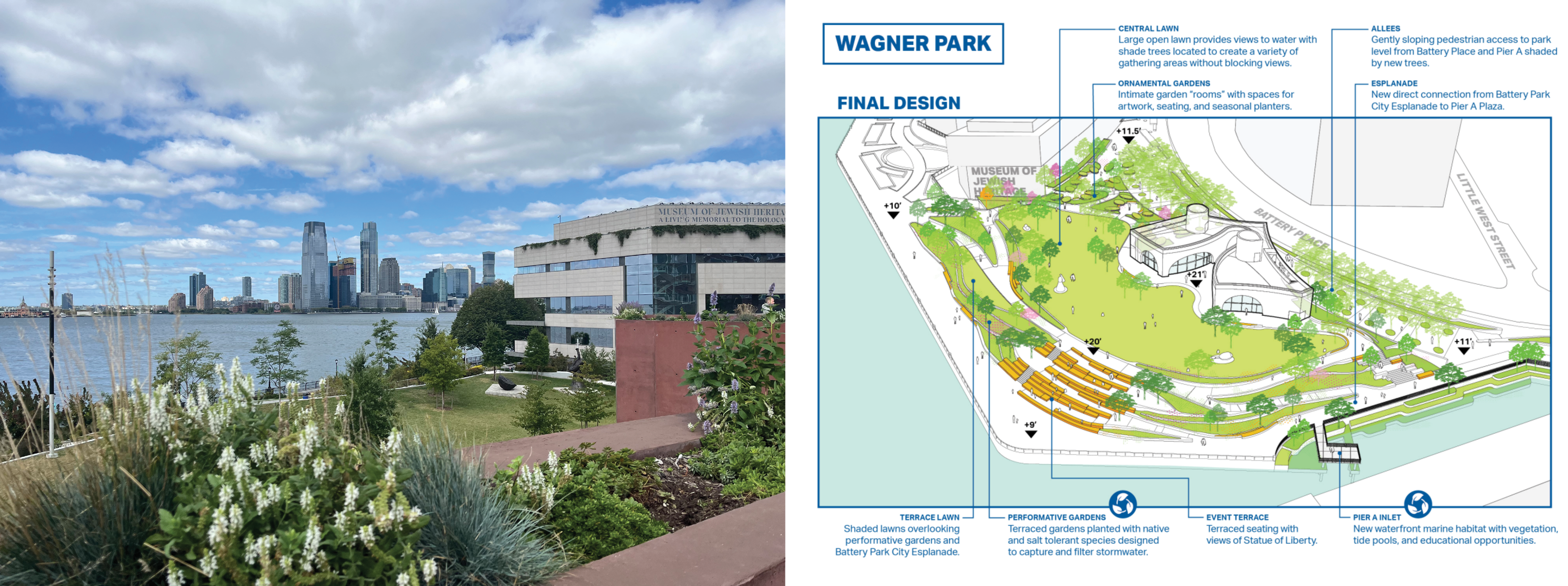
Just as important, the park is designed to work with water, not only against it:
- Integrated Flood Barrier System: Built into the landscape to protect against storm surges and sea level rise.
- Stormwater Management: Grading and layout direct overland flows into a system that maximizes water capture and reuse.
- Sustainable Materials: Salvaged trench drains, stone, and wood from the original park have been reused in construction.
- Native Plantings: Designed to reduce water use, lower maintenance, and support local biodiversity.
From Manhattan to the Adirondacks
Walking through Wagner Park, I kept noticing that its best features, such as capturing stormwater, using native plants, and giving water somewhere to go, are ideas we rely on at AFC. The main difference is scale and setting. In a city, resilience is largely built: walls, barriers, and engineered defenses designed to hold water back. Here in the Adirondacks, resilience is grown. Our safeguards are the rivers, lakes, wetlands, and floodplains themselves. Instead of millions of people, we work with millions of acres.
But the goal is the same: keep communities safe when the next big storm arrives. And in the Adirondacks, that starts with helping our streams do what they do best.
Healthy Streams Are Flood Protection
Streams are more than gutters moving the earth's waters. They are dynamic, living networks that transport water, nutrients, sediment, and wood. They are vital to communities, both human and non-human alike. Healthy streams access their floodplains, store water, and dissipate energy, much like the grading and drainage systems at Wagner Park. When their natural processes are compromised by infrastructure, the impacts ripple outward. Incised and degraded channels move water faster and concentrate erosive power, increasing downstream flooding and damage. Road crossings, culverts, bridges, and buried utilities all fail when channels are unstable.
Healthy streams support fish, macroinvertebrates, amphibians, and riparian ecosystems. Our restoration methods improve geomorphic complexity, sediment balance, and riparian shading — critical for cold-water fisheries. Restoring a degraded stream is fundamentally about rebalancing water, sediment, and energy.
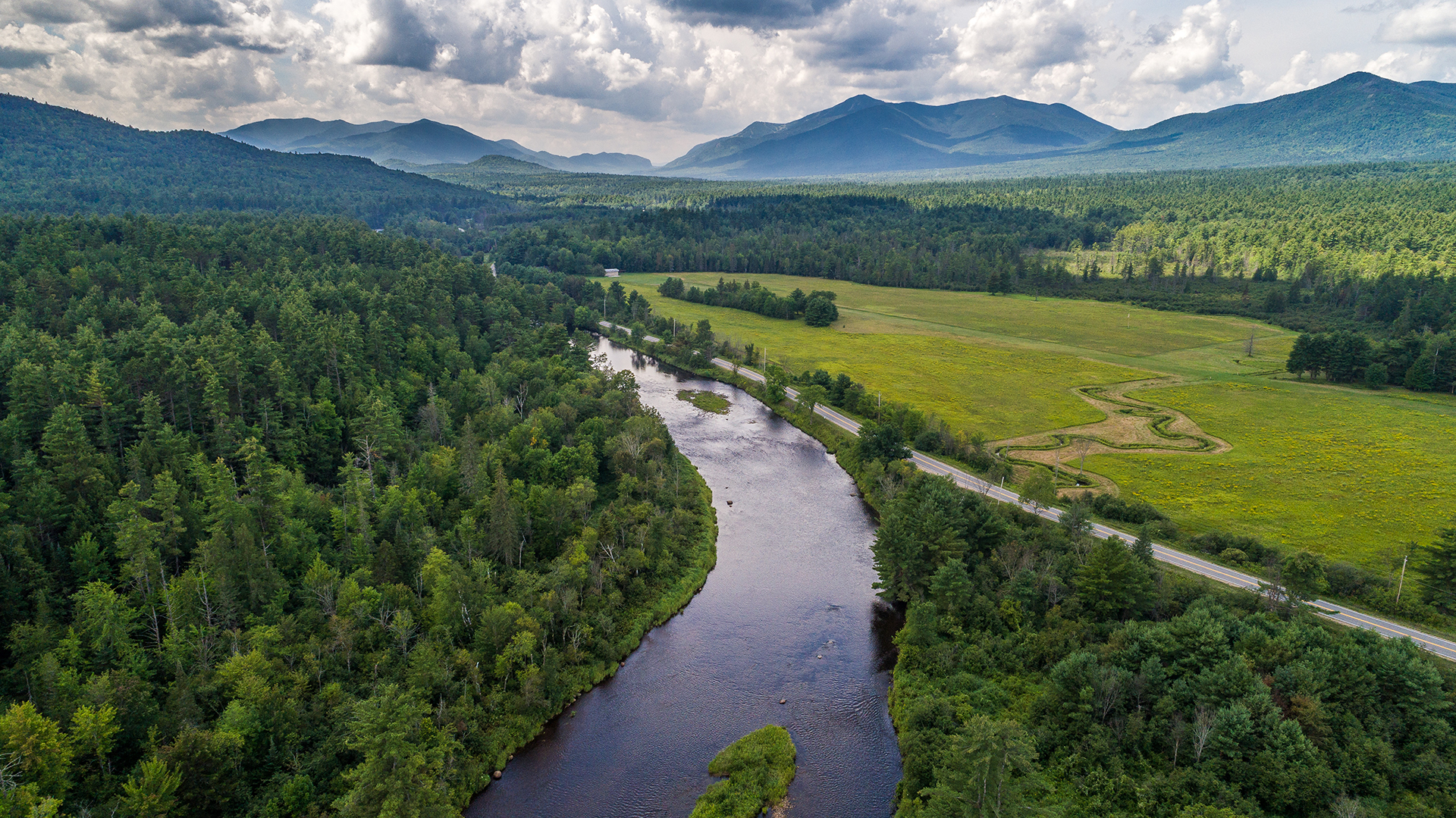
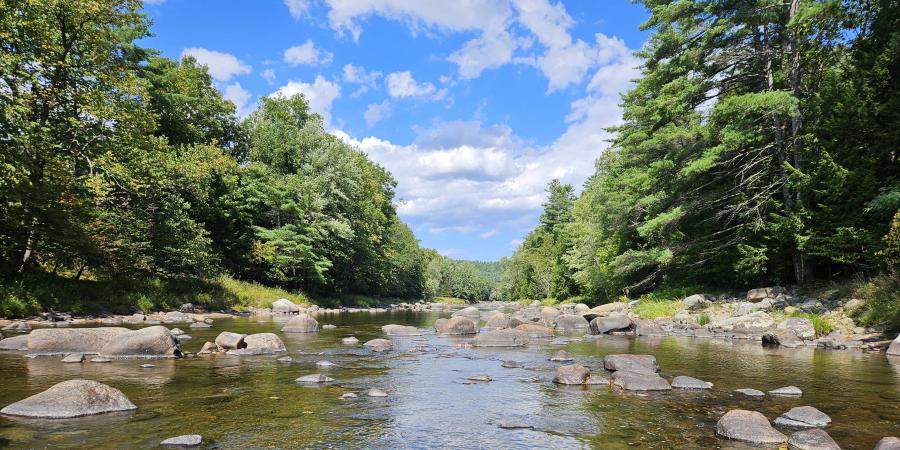
Ausable River (Dream Mile), an example of AFC’s stream restoration work. Photo by Brendan Wiltse
Last year, AFC received the NYS Adaptation and Innovation Award for our East Branch Ausable Restoration Plan in Jay, NY. This award recognized the project as “a gold standard of climate-resilient infrastructure that enhances communities and mitigates hazards.” The NYS Adaptation Practitioners Network, who also organized the NYC Climate Week field study we attended, gave us the award.
Just as modeling told New York City where and how high its barriers needed to be, AFC's stream assessments identify incision, aggradation, lateral migration hazards, and other risks before costly failures occur.
Removing Barriers in the Ausable Watershed
Across the Ausable watershed, one of the biggest obstacles to stream health is one most people never see. Beneath rural roads, streams are squeezed through culverts and bridges often much narrower than the stream itself. Undersized road crossings and old dams block fish from reaching the cool, healthy habitat they need, while worsening erosion, flooding, and costly road maintenance in a self-reinforcing cycle.
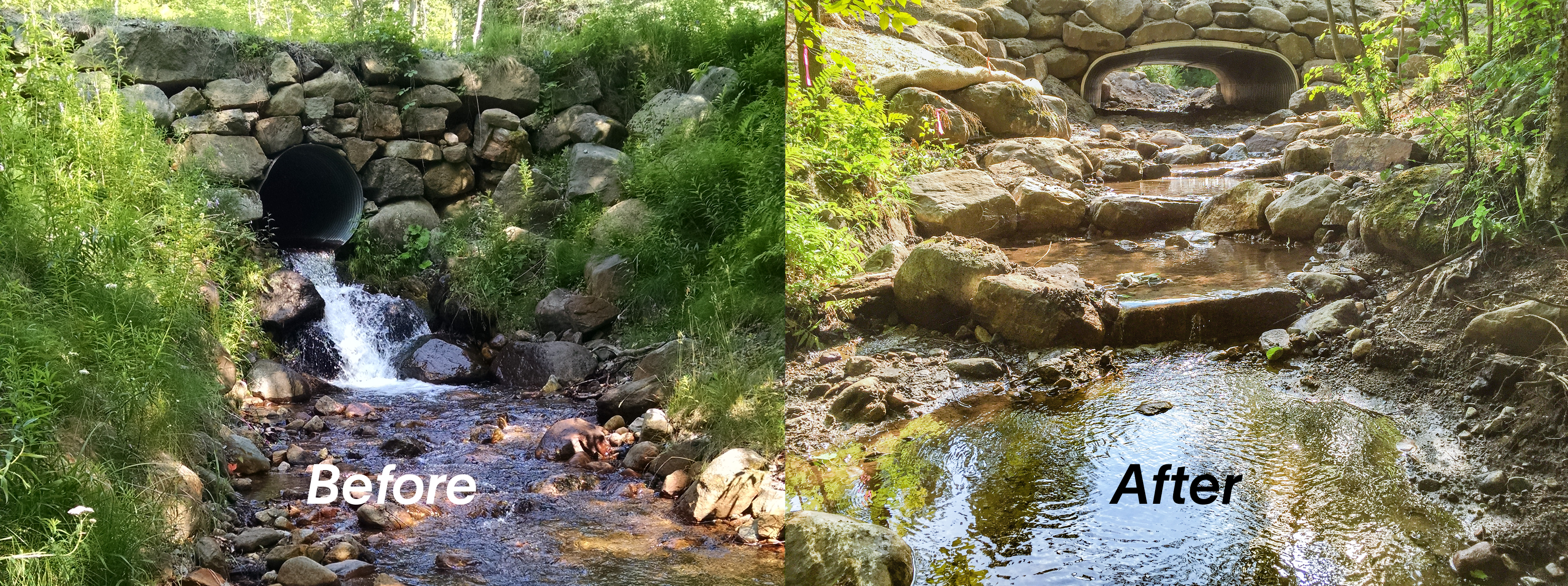
AFC's climate-ready culverts improve stream connectivity, fish habitat, and community flood resilience by replacing road-stream crossings with designs engineered to allow for natural stream pattern and flow. The before and after images of the Otis 1 culvert above depict the original undersized culvert perched above the stream and the new, appropriately sized culvert with improved aquatic organism passage.
Fortunately, these problems are fixable. As the Otis 1 culvert shows, we can replace failing crossings with properly sized structures and remove old dams, restoring flow for wildlife and improving flood resilience for communities. Prioritizing the most impactful sites delivers the greatest gains for both stream health and local infrastructure. These projects are our flood barriers: quieter and less visible than a wall along the Hudson River, but designed to protect roads, homes, people, wildlife, and habitat all the same.
Growing Resilience
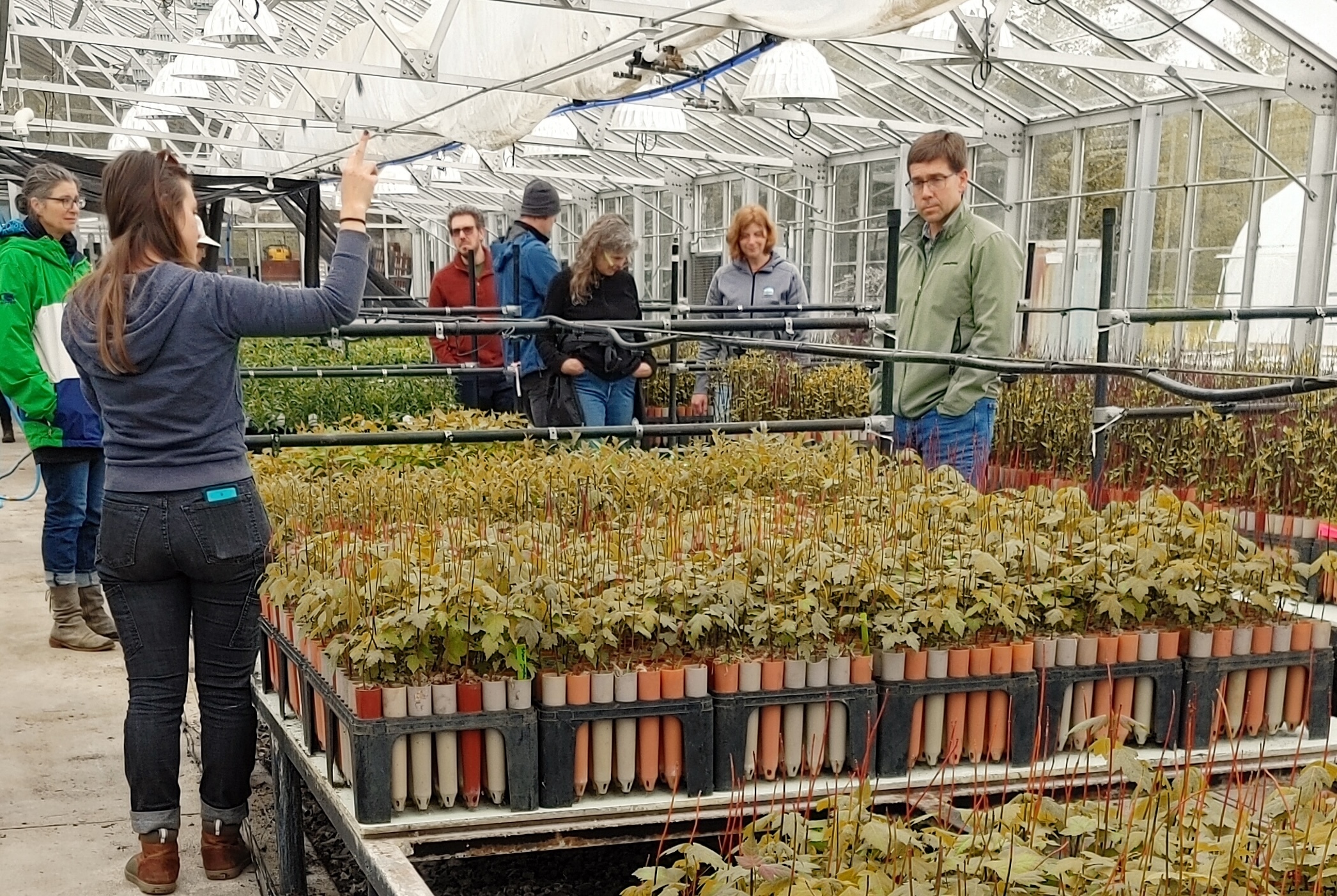
Healthy riparian vegetation is essential to holding streambanks together. Plants play a critical role in the hydrology, hydraulics, and geomorphology of a functioning stream corridor. Native vegetation supports the self-healing capacity of river systems. That's the idea behind our conservation nursery, where native plants are grown to stabilize banks and restore river corridors. It's the Adirondack equivalent to Wagner Park's native plantings: living infrastructure that reduces erosion, supports biodiversity, and gets stronger over time.
Different Tools, Shared Purpose
The people of New York City remember Sandy. In the Ausable watershed, we remember Irene. In both places, that memory is a call to act before the next storm. As AFC’s Executive Director, Kelley Tucker put it, "We can't stop another Irene, but we can make the river as resilient as possible."
Whether it's a flood wall in the city or a restored river in the Park, the goal is the same: protecting the places and people we love from a changing climate. In the Adirondacks, that means restoring, monitoring, and caring for the freshwater systems that sustain us in return.
Story by Shonet Newton, Development Director.
Sign-up for our e-newsletter to get weekly updates on the latest stories from the Ausable Freshwater Center.

