Clean water relies on clean gear.
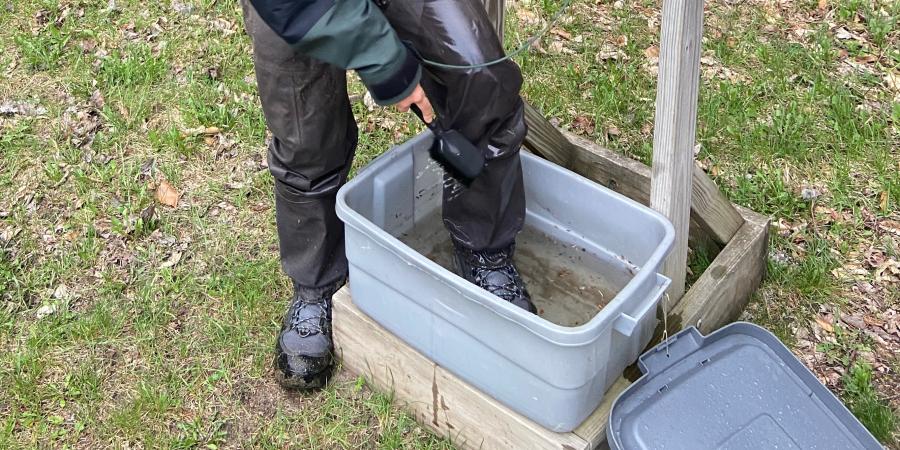
If you frequent the Ausable River, you may have noticed Ausable Freshwater Center’s wader wash stations at several popular fishing pulloffs along the river. The stations are equipped with a covered bin of 5% salt water and a scrub brush for removing aquatic invasive species (AIS) from waders and boots before entering the river.
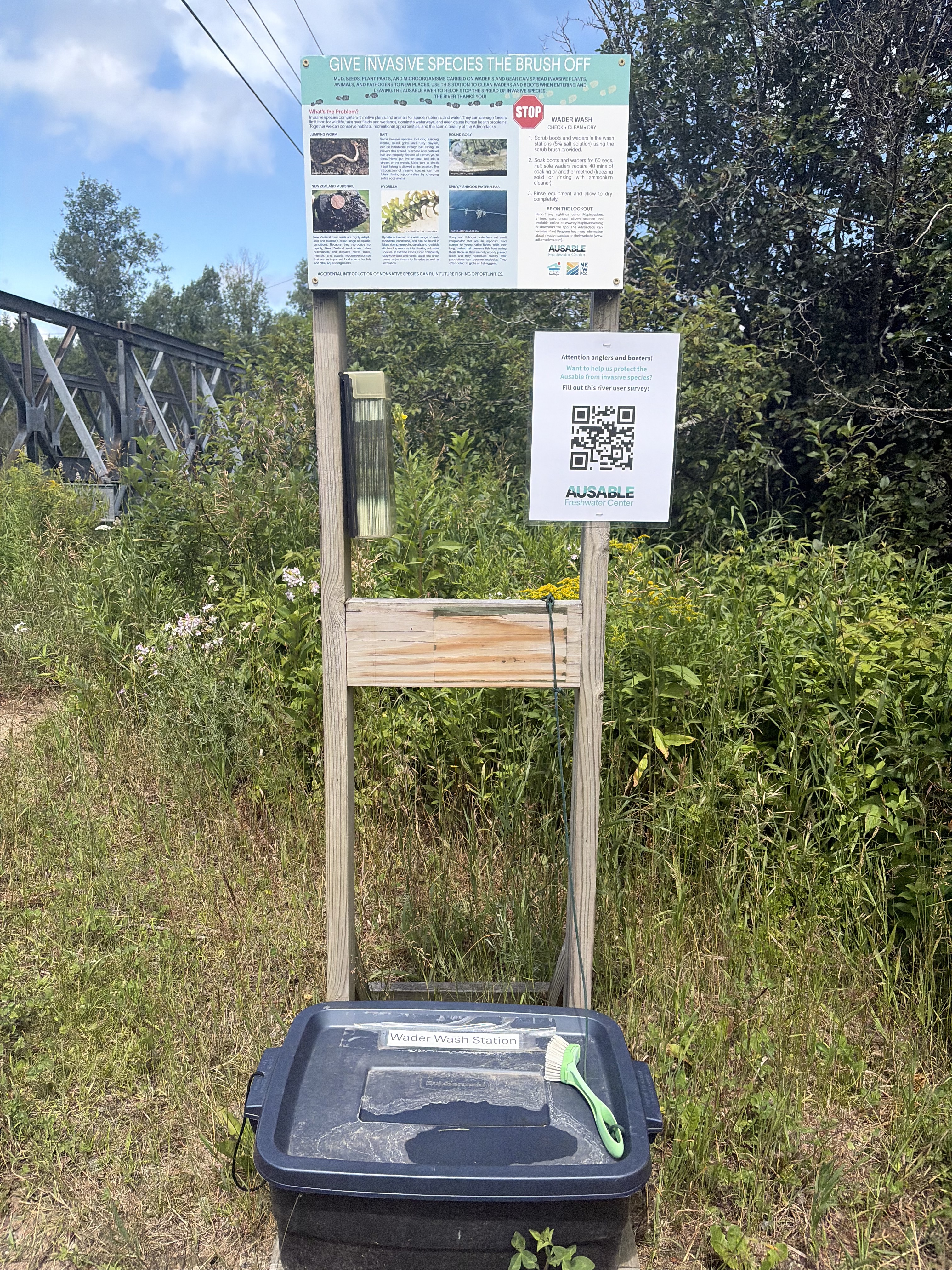
Our wader wash station located at the Iron Bridge access point on River Rd, Lake Placid.
We understand that there are only so many wader wash stations out there and that sometimes there may not be one nearby! Don’t worry, there are many other ways to clean your gear and prevent the spread of AIS.
Invasive species can be introduced through many human activities, but the most common ways that aquatic invasive species are spread is through watercrafts, fishing and recreational gear, bait, and the aquarium trade. In fact, zebra mussels and didymo (aka rock snot) have been found to survive especially well on fishing gear, which has been correlated with their spread (Bothwell et al., 2009; Banha et al., 2016). Many aquatic invasive organisms, including zebra mussels, spiny waterfleas, and New Zealand mud snails, are microscopic in at least one life stage and are small throughout their entire lives. This makes them easy to transport and difficult to see. Because they are so tiny, they can be transported in very small amounts of water, including wet gear such as life vests and waders. Gear that has been out of water for a few days but is not completely dry can still transport invasive species. For example, New Zealand mud snails can survive out of water for 3-5 days, some plant species have proven to survive in damp environments for two weeks to several months (Anderson et al., 2015). Combining drying with a cleaning method is the only way to ensure that anglers are not spreading invasive species even if there are several days between different bodies of water.
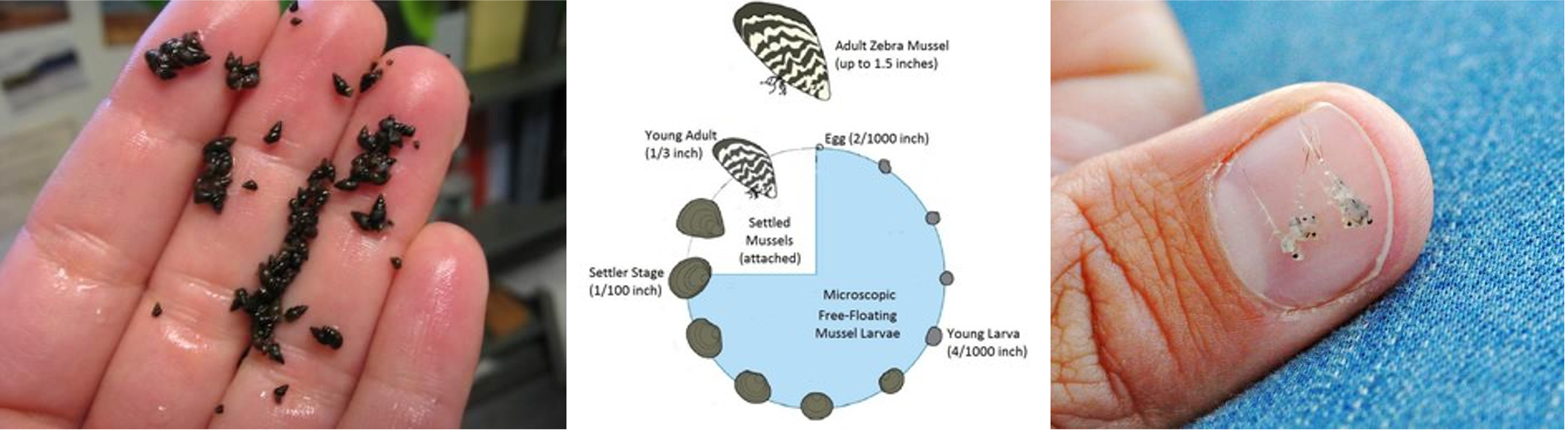
New Zealand Mudsnail (Photo by Robyn Draheim, USFWS); Zebra Mussel Life Cycle (Image from Texas Parks and Wildlife); Spiny Waterflea (Photo NYSDEC)
Aquatic invasives removal from waders is similar to the clean, drain, dry message for boats. A big difference is that you may move around quite a bit more from location to location in your waders before they have full time to dry. We use the message check, clean, dry when referring to fishing gear.
Check gear for any algae, plants, and sediment before leaving the fishing site. Remove any debris and leave at the site. Do not wash debris down the drain!
Clean gear with hot water or a detergent/chemical solution. If using a solution, soak gear for at least 1 minute and dispose of solution down a sewage drain or outdoors at least 300ft from water. Do not dispose of wader wash solution down storm drains!
Dry gear for a minimum of 48 hours after it is dry to the touch.
Support our biodiverse habitats work for wildlife and their habitats. Give with confidence today!

Cleaning Methods – Pros and Cons
The type of cleaning agent (if used) can have an effect on the longevity of your waders.
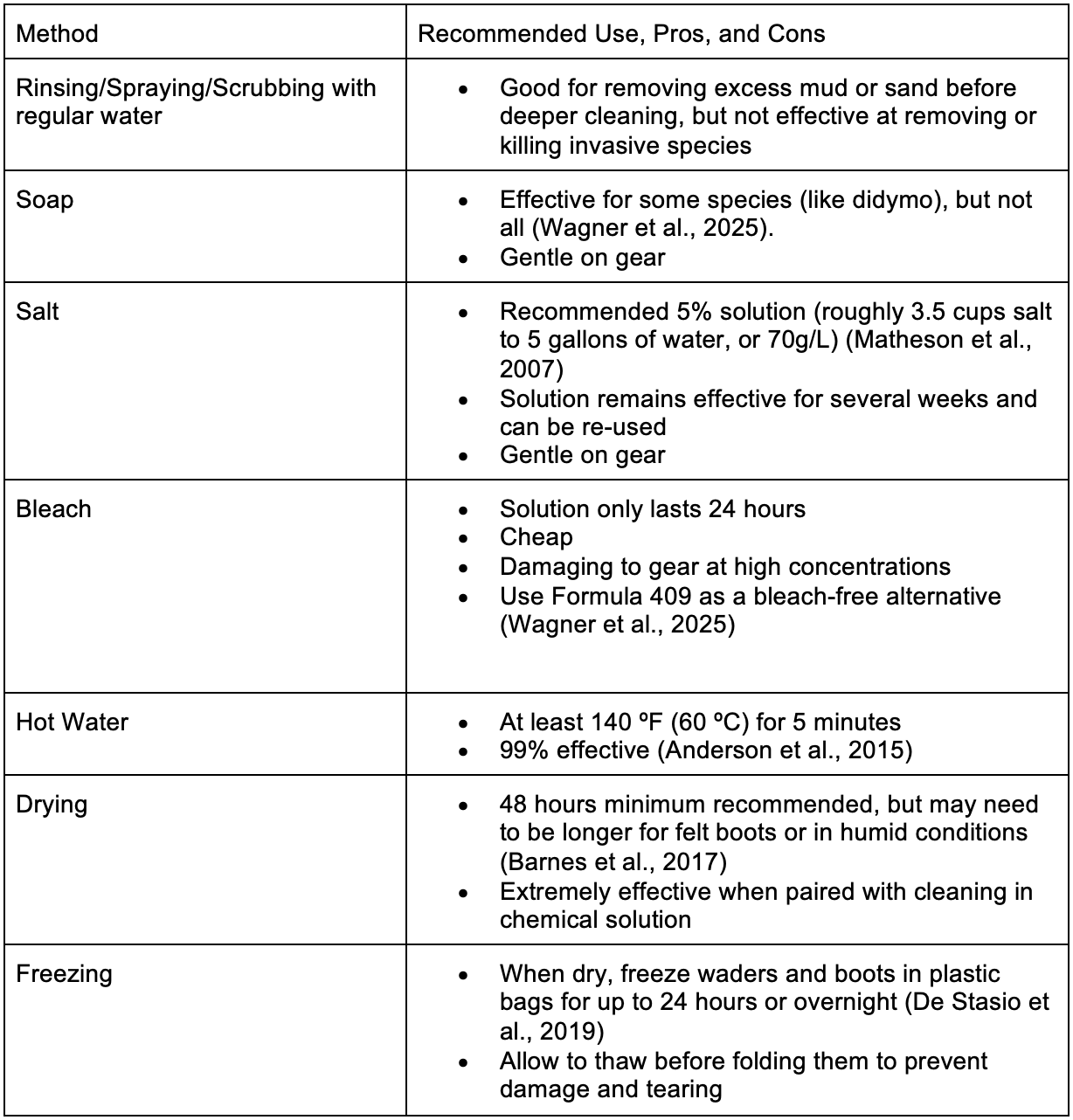
For those interested, the Wisconsin Department of Natural Resources has made this very comprehensive review of which methods are effective for which specific species.
The Boot Debate
Felt soled boots are illegal in 6 states (Alaska, Nebraska, Missouri, Maryland, Rhode Island, and South Dakota) and in Yellowstone National Park due the difficulty in cleaning them and removing invasive species from them. Felt boots are legal in NYS at the time of this post and are preferred by some anglers in the Ausable for better grip on the river bottom’s slick rocks. In fact, many anglers keep a pair of felt boots for use in the Ausable only!
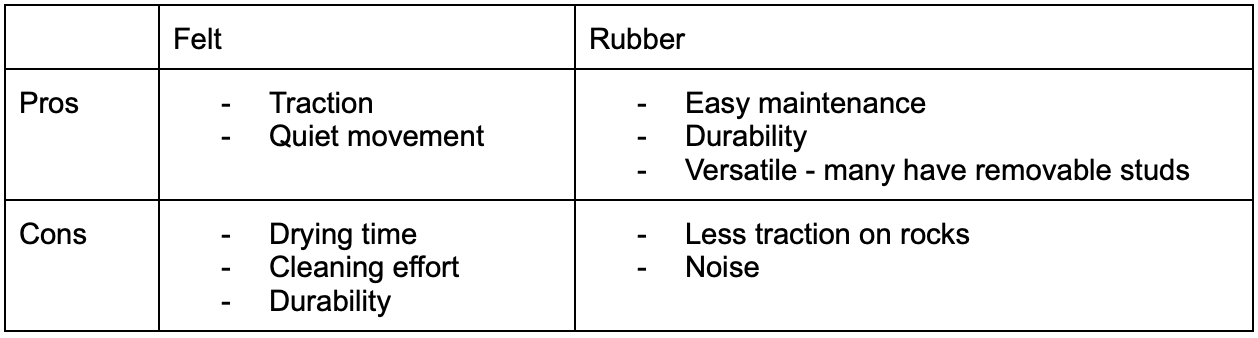
If you use felt boots, take extra precautions to clean them. They are a great tool for getting around in the river so long as the user is conscientious about removing AIS. Even if you’ve left your boots for 48 hours, they may have not fully dried. Boot dryers (like the one pictured below) that use mild heat and fans may help. However, it is important to use them according to the manufacturers instructions as to not damage your boots over time. Another possible solution is having multiple pairs of boots to rotate to ensure sufficient drying time.
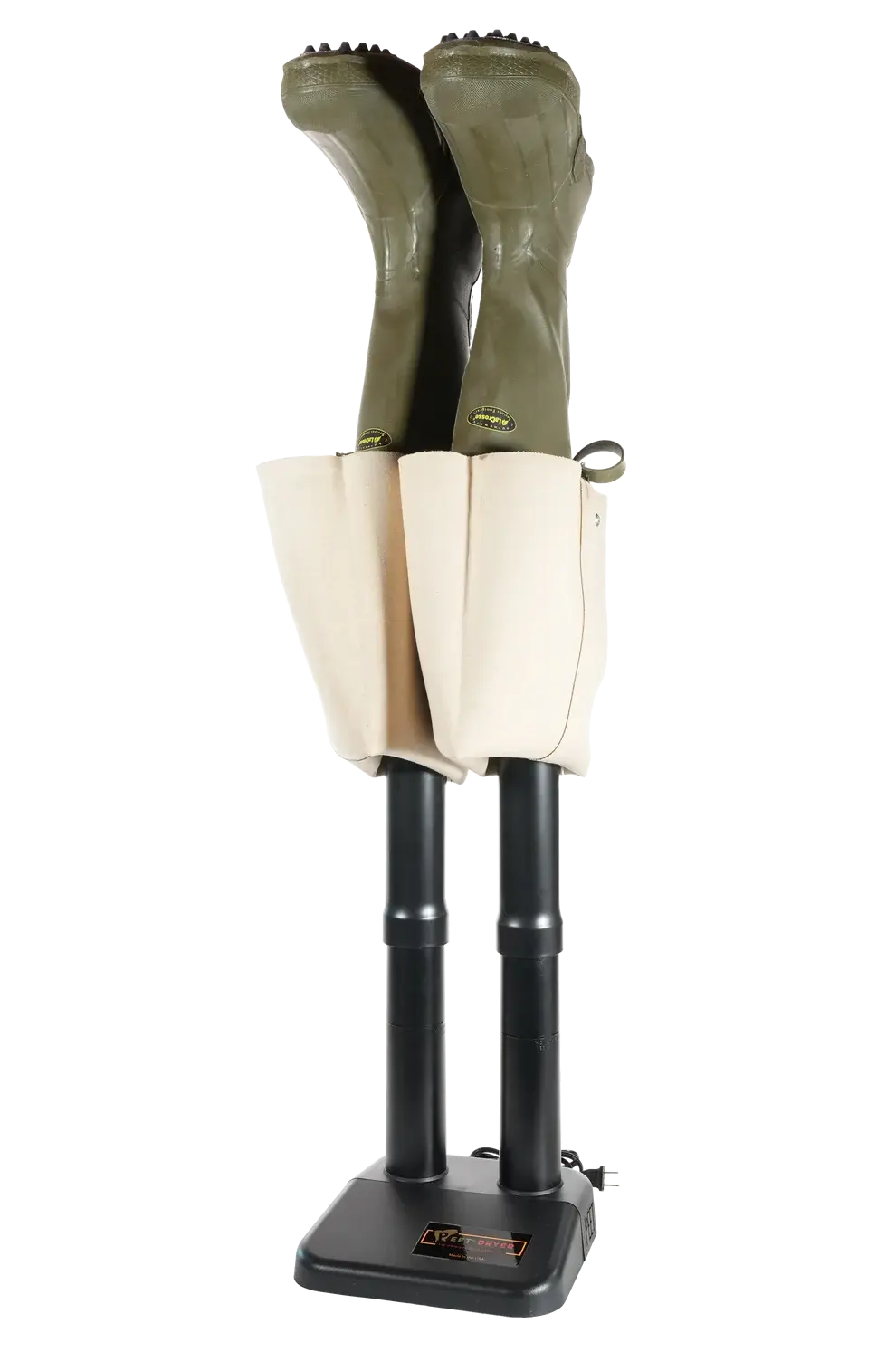
“The Original PEET Wader Shoe & Boot Dryer” from PEET Dryer
The best way to avoid spreading invasive species between rivers is to stay informed on what species impact or threaten the rivers you fish and to take the proper precautions when moving between waterbodies.
Thanks for doing your part to protect the waters we all love!
Story by Ellen Lansing and Naomi Hodgson, 2026 River Stewards.
Sign-up for our e-newsletter to get weekly updates on the latest stories from the Ausable Freshwater Center.

Barnes, M., Jerde, C., Keller, D., Chadderton, W., Howeth, J., and Lodge, D. (2017). Viability of Aquatic Plant Fragments following Desiccation. Invasive Plant Science and Management 6, 320–325. doi: 10.1614/IPSM-D-12-00060.1
De Stasio, B. T., Acy, C. N., Frankel, K. E., Fritz, G. M., and Lawhun, S. D. (2019). Tests of disinfection methods for invasive snails and zooplankton: effects of treatment methods and contaminated materials. Lake and Reservoir Management 35, 156–166. doi:10.1080/10402381.2019.1599086
Matheson, F., Dugdale, A., Wells, R., Taumoepeau, A., and Smith, J. (2007). Efficacy of saltwater solutions to kill introduced freshwater species and sterilise freshwater fishing nets. Department of Conservation Research and Development Series 261.
Wagner, N. D., Geist, J. A., Mersino, H. M., and Tiegs, S. D. (2025). Simultaneously decontaminating angling gear for New Zealand mudsnails Potamopyrgus antipodarum and didymo Didymosphenia geminata: A comparison of two chemical approaches. North Am. J. Fish Manage. 45, 210–216. doi:10.1093/najfmt/vqaf008
