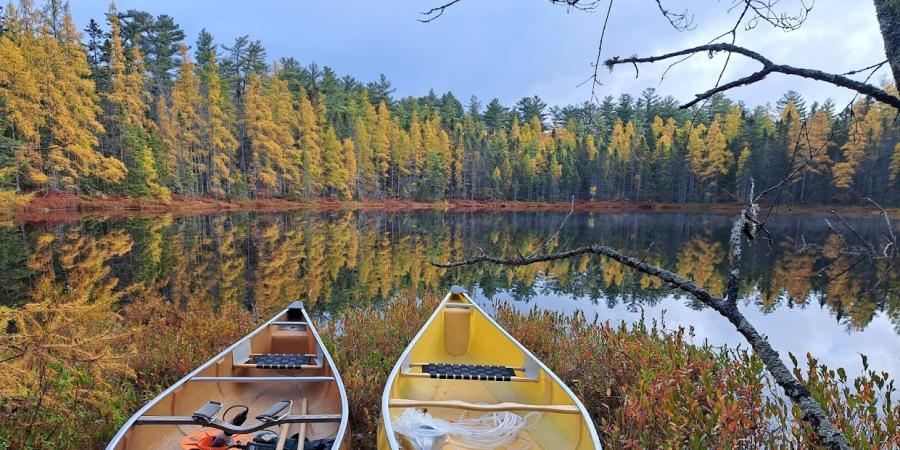
Last fall, Ausable Freshwater Center (AFC) field teams began collecting data for the Survey of Climate and Adirondack Lake Ecosystems (SCALE). SCALE is a comprehensive and diverse lake assessment. SCALE aims to establish a new chemical and ecological baseline for Adirondack lakes to answer several crucial questions that will help shape management and mitigation practices in the face of a changing climate. This survey's techniques are built on long history of lake monitoring in the Adirondacks, namely the groundbreaking Adirondack Lakes Survey that began in the 1980s. To better contextualize SCALE, it's important to understand this history.
By 1983, scientists knew that acid deposition was negatively affecting landscapes and water bodies in the Adirondacks, but the scope and extent of the impacts was unclear. To fully assess these impacts, governmental and academic institutions proposed the Adirondack Lakes Survey (ALS). The survey offered an unprecedented scientific snapshot of 1,469 lakes and ponds from 1984-1987, which provided chemical, physical, and biological data to characterize the chronic impacts of acidic precipitation on lake ecosystems. This sampling effort was essential for guiding the 1990 Clean Air Act Amendments (CAAA), the primary federal air quality law to address the issue of acid rain, and particularly nitrogen oxide (NOx) and sulfur dioxide (SO2) emissions from electric power plants powered by fossil fuels. Moreover, the variation among lakes revealed by the ALS offered a baseline against which to measure the effectiveness of the CAAA. This survey assessed a multitude of criteria in a wide range of lakes located across the Adirondack park. The information collected not only provided insight into current water quality issues, but it also established baseline data that could be used to guide and supplement research projects for years to come.
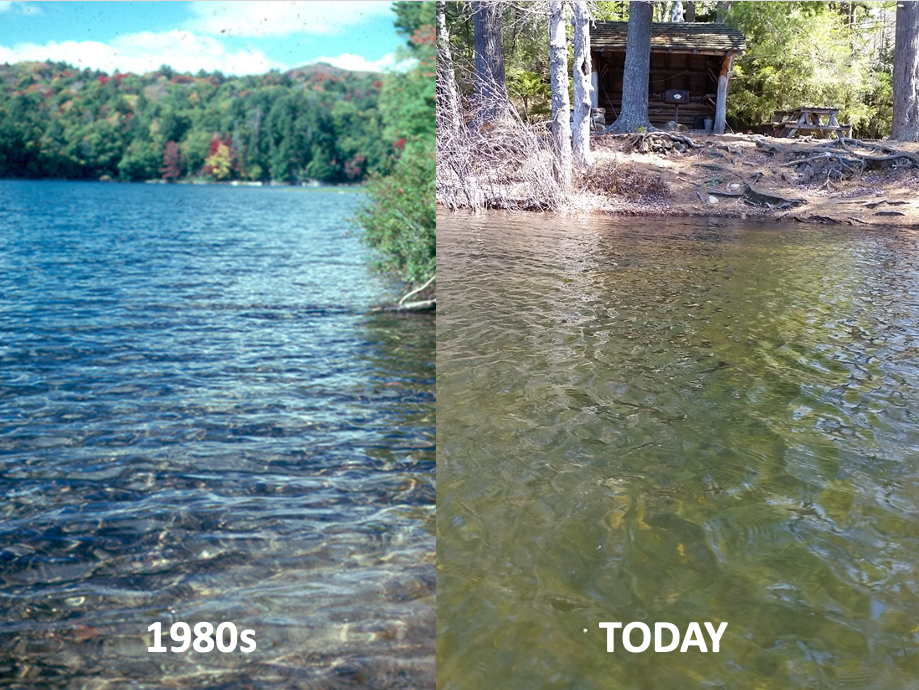
Acid rain caused many Adirondack lakes to become transparent. Since the Clean Air Act passed, many ponds have undergone “browning.” This is a good sign of recovery, but browning can also be caused by other factors (Photo: Curt Stager).
The Adirondack Lakes Survey of 1984 is still one of the largest lake surveys to date. The study and subsequent long-term monitoring projects helped shape lake management practices and even led to changes in environmental policy. But the lakes have changed. While the response to reducing acid rain has been positive, Adirondack lakes face new threats like warming, algal blooms, and hypoxia. It's time for a new survey, one that can be compared to the original and utilizes updated techniques and knowledge to evaluate current concerns.
SCALE utilizes many areas of study, primarily limnology, aquatic biology, and meteorology. The survey draws on the knowledge and input of many different collaborators including scientists at Rensselaer Polytechnic Institute (RPI), Cornell, State University of New York College of Environmental Science and Forestry (SUNY ESF), Syracuse University, and City University of New York Graduate Center (CUNY). Our 2025 field work was divided into three categories: environmental DNA (eDNA), animal tissue chemistry analyses, and high frequency sensor deployment.
Before sampling can begin, field teams prepare and plan for field work. Preparing equipment, researching routes, planning sampling schemes, training staff, and focusing on safety in the field is a team effort. After packing up cars, mounting boats, and double-checking our supplies lists, we embark on our journeys. Some of the lakes are right in our backyard, but many are one, two, or several hours away. While we’re able to drive directly to several of the ponds, many trips involve hiking, sometimes bushwhacking off-trail.
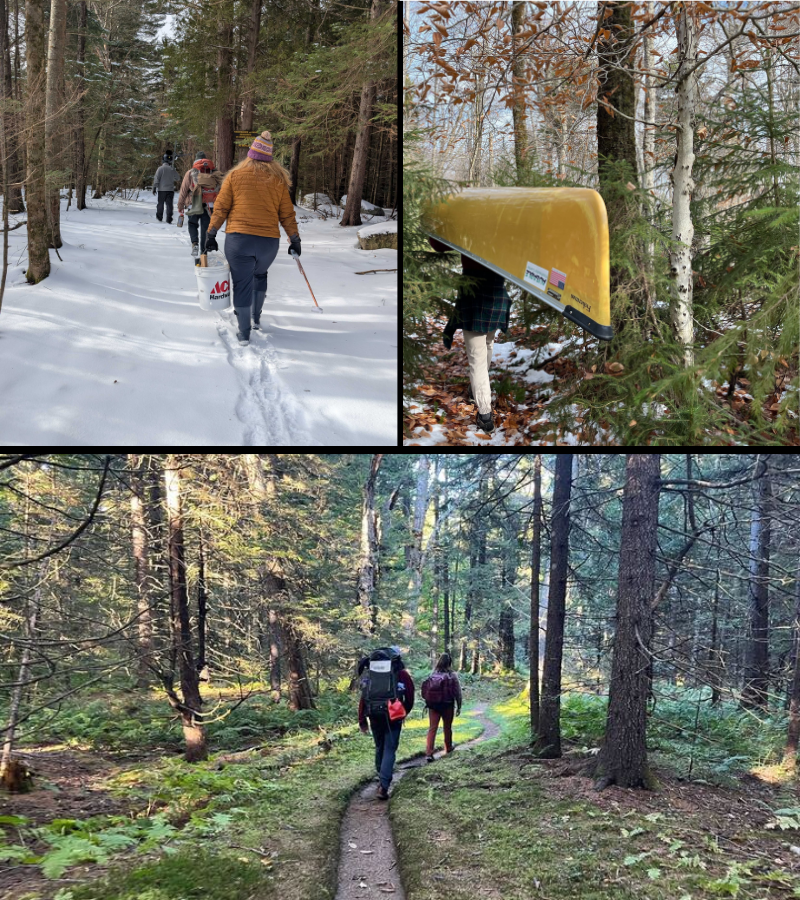
Sampling work in the wilderness often means there’s some hiking involved!
eDNA
Environmental DNA (eDNA) is genetic material found in environmental samples such as soil, sediment, and water. Utilizing eDNA is much easier and less invasive than historical sampling techniques, as many species can be identified in a small amount of water. In the past, researchers typically netted lakes to learn about fish populations, which provided a snapshot into fish communities. eDNA is not harmful to fish or other species, so it can be performed several times over the field season, and it can detect species that are less likely to be captured through netting, such as bottom-dwelling species.
Support our water quality work for clean water and healthy streams. Give with confidence today!

The analysis of eDNA is a relatively new technology, so scientists are still studying optimal collection methods for different waterbodies and research questions. SCALE researchers want to classify entire lake communities, rather than at specific locations within the waterbodies. This means that our sampling needs to cover the entire lake. AFC staff divide the lake into near-shore and offshore locations. The number of samples at each lake is determined by lake size, depth, and perceived species richness (determined by previous surveys).
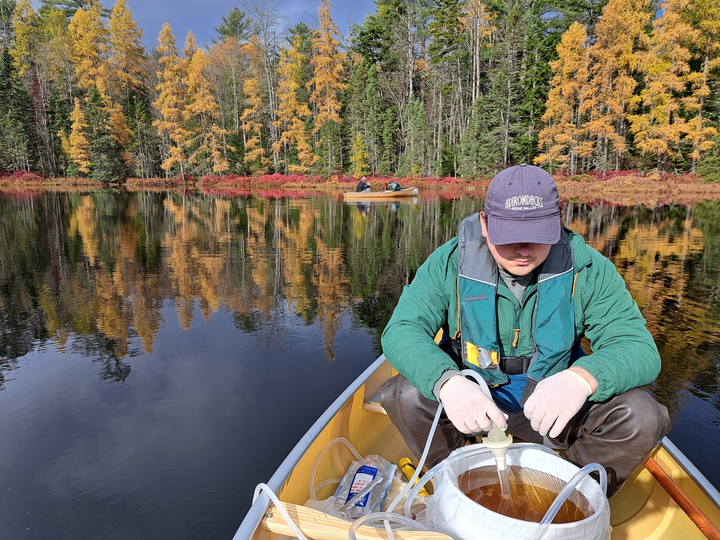
We pump water from near and offshore sites into a bucket, then filter the composite sample.
Animal Tissue Chemistry Analyses
Many lakes in the Adirondacks face two primary threats that impact cold-water fish, including our native salmonids: brook trout, lake trout, and whitefish. The first threat is climate-induced increases in water temperature, and the second is deep-water oxygen depletion. For animal tissue chemistry analyses, AFC collects multiple organisms including leaves, zooplankton, aquatic insects, and fish.
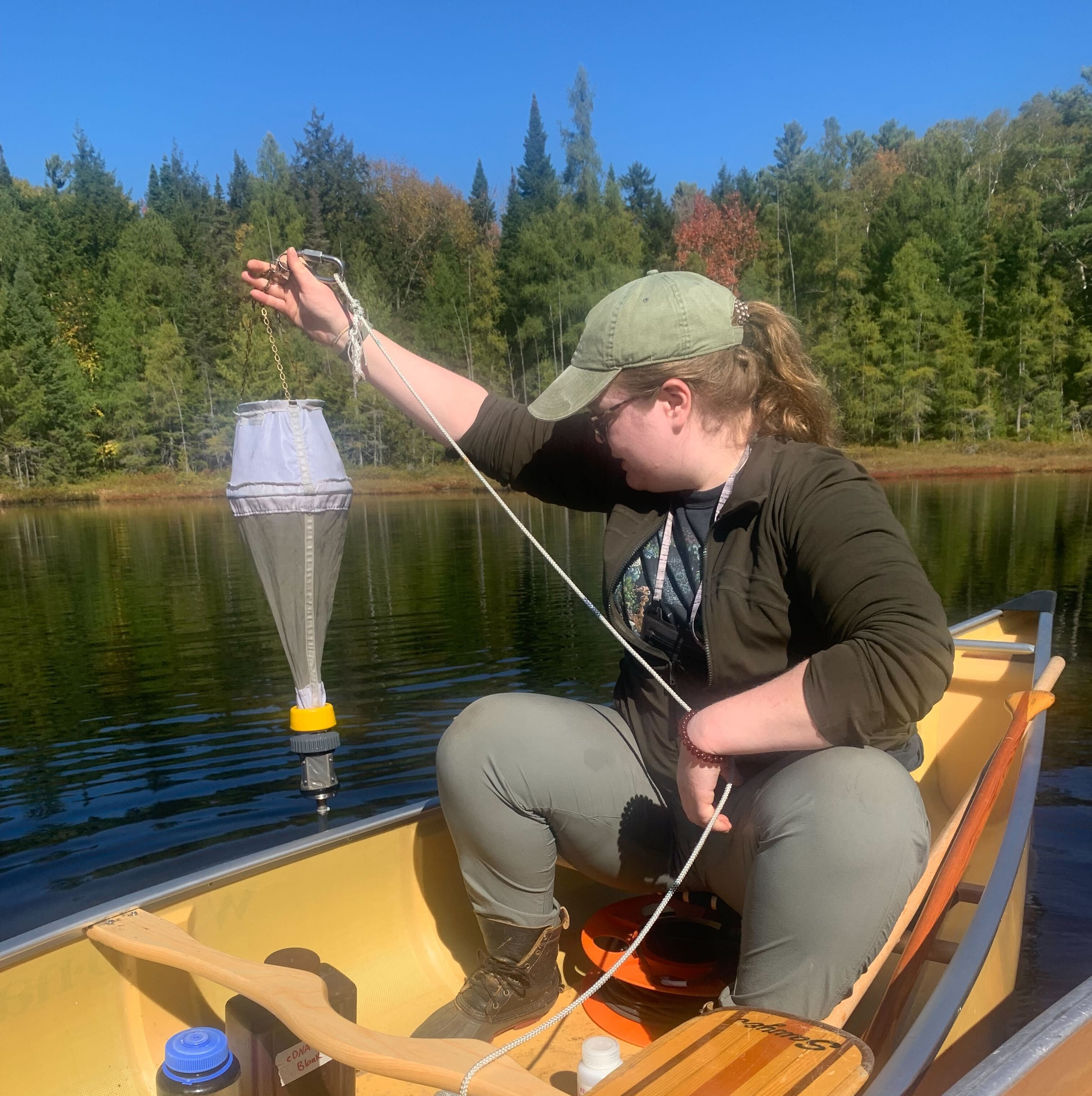
Zooplankton nets have tiny pores to filter out the small organisms.
Researchers are using isotopes found in these samples to track nutrients and to ultimately understand the joint implications of oxy-thermal stress and warm-water non-native species on lake food webs. We sample zooplankton from a canoe using a fine mesh net, and in the fall, we will collect fish from a few select lakes. To obtain aquatic insects, or macroinvertebrates, we flip over rocks, wood, and other debris around the shoreline and pick out the bugs in the families we’re studying: Heptageniidae (mayflies), Odonata (dragonflies and damselflies), and Gastropoda (snails).
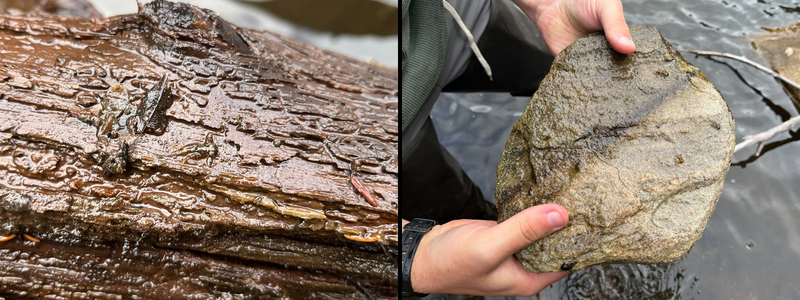
We often find macroinvertebrates on the undersides of rocks and dead wood in the water.
In addition to our target species, we identify a multitude of other fun bugs, like water beetles and caddises of all shapes, sizes, and casings.
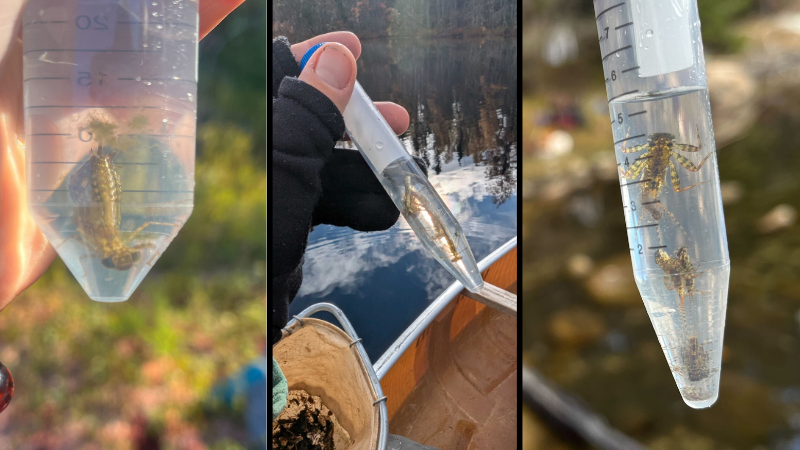
Dragonflies, damselflies, and stone flies are some of our most commonly found macroinvertebrate species.
High frequency sensors
AFC field crews installed weather stations at 8 lakes. This year, field teams are deploying weather stations at 20 lakes to help researchers understand how meteorological variables such as rainfall, solar radiation, wind, and humidity contribute to chemical and biological conditions in lakes and ponds. The data from our high frequency sensors will assess lake metabolism, which will aid in evaluating the productivity and carbon cycling attributes of lakes.
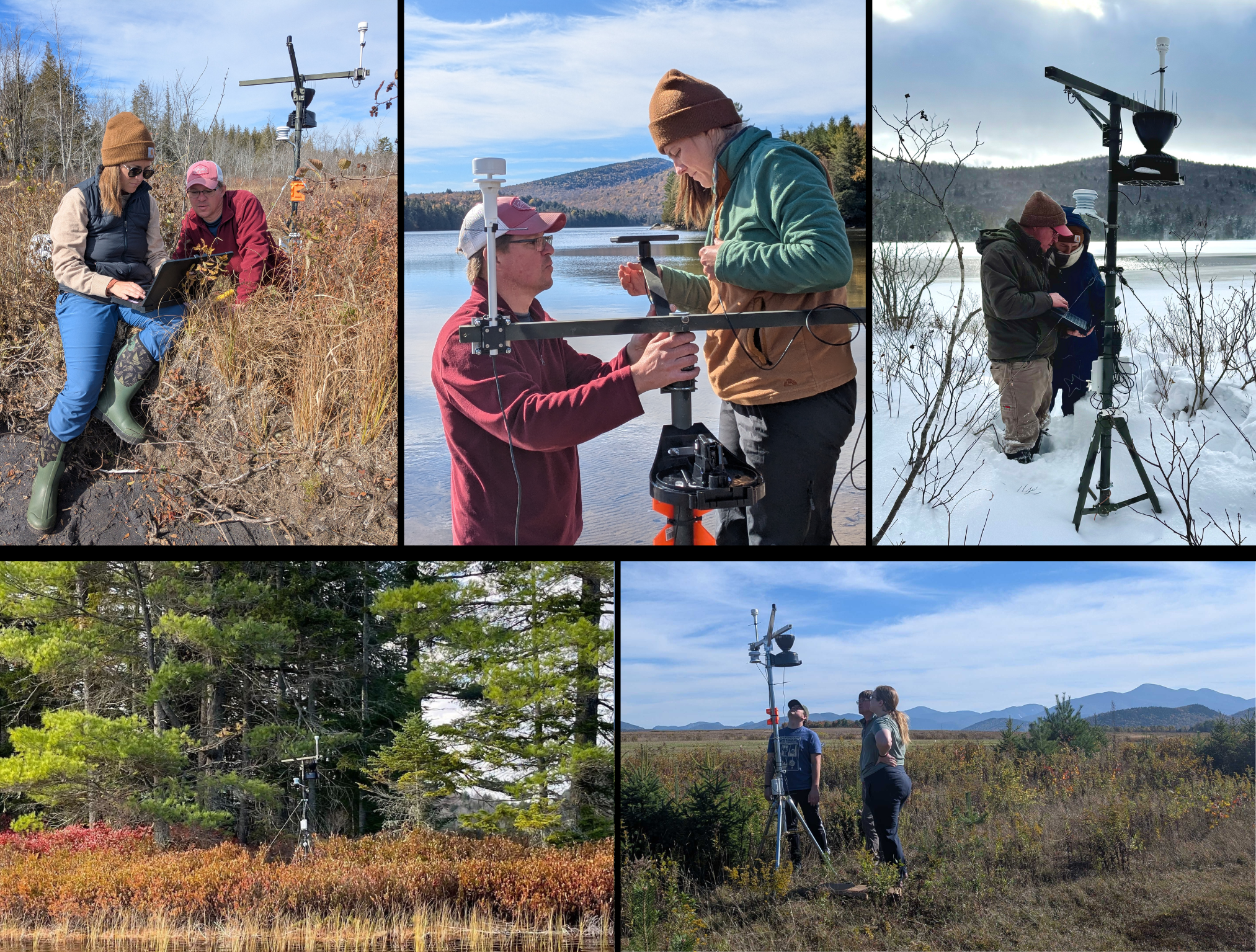
Weather stations deployed on eight lakes in 2025. We even got to visit a couple in the snow!
Our field teams learned a lot during the busy fall 2025 season. We’re using that experience to evaluate and refine our methods and establish protocols for further aspects of sampling that will be added to our suite in 2026. We’re excited to get back in the field and continue gathering vital environmental information about Adirondack lakes.
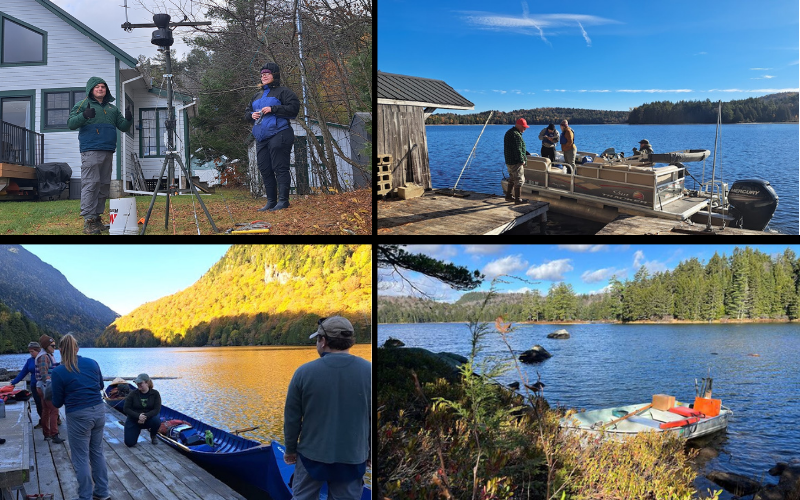
We had a lot of help from friends along the way! Whether they provided extra boats, offered technical assistance or tactical guidance, or simply suggested a good place to put a weather station, we couldn’t have done it without our partners.
Want to know more about the data and methodologies that are being used to study key drivers of change in Adirondack waters? While we don't have the results from our 2025 work yet, you can read the SCALE Pilot Report to better understand what our teams are doing in the field.
Story by Krista, Water Quality Research Associate.
Sign-up for our e-newsletter to get weekly updates on the latest stories from the Ausable River Association.

