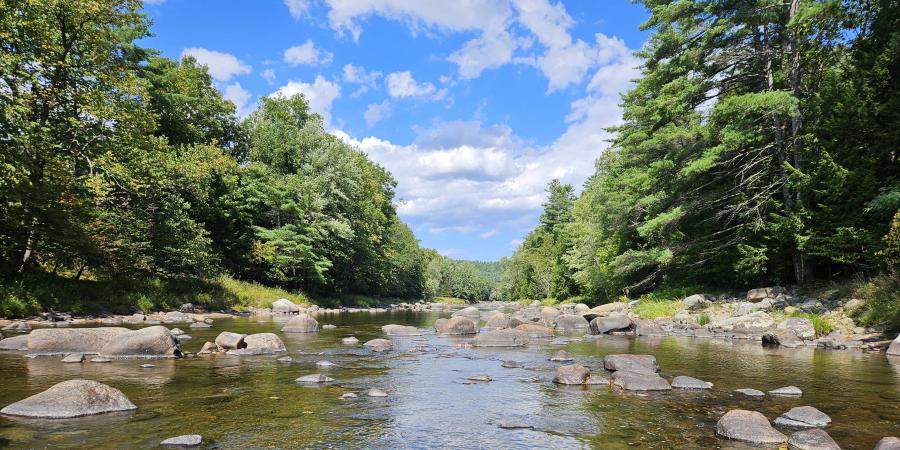
The Ausable Freshwater Center is advancing self-sustaining stream restoration and flood resilience in the Adirondack region. We have multiple in-channel projects designed and engineered for implementation, which, together with those projects already completed, should ensure the recovery of Adirondack stream ecosystems. Our holistic approach to riparian restoration recreates the interplay of stream, buffer, floodplain, and wetland, and creates flood resilience and healthy natural resources for local human communities.
AFC's work includes large-scale efforts to stabilize streambanks, reduce erosion, and improve water quality. Riparian ecosystems are transition zones between terrestrial and aquatic areas and include stream and lake banks, floodplains, and wetlands. They support biologically distinct, diverse, and productive communities that provide essential ecosystem services such as storm resilience (absorbing floodwater and ice, reducing bank erosion), temperature regulation, water filtering, dense food webs, and more.
Why are native species important?
To implement successful and long-lasting stream restoration projects, AFC studies the way nature heals itself after disturbances. Many of our projects mimic the natural successions of revegetation and begin with first-succession species. Fast-growing, sun-loving plants such as willows, poplars, birches, dogwoods, and alders can quickly establish root structure in disturbed areas with poor soil. With their ability to withstand ice and flooding, sometimes being knocked to the ground only to grow anew in spring, these tough, vigorous pioneers lay the groundwork for revegetation. We often plant these species at project sites to begin repairing the function of riparian ecosystems. This approach creates space and opportunity for the establishment of second-generation, longer-lived species such as maples, oaks, and hemlocks. These species are shade-tolerant and can establish themselves in the understory until there is an opening in the canopy. Sometimes we include these second-generation species in the initial planting, assuming these trees will establish at their own rates. Other times, we will plant these species in a second round of plantings. This phased approach mimics natural succession, ensuring both short-term stabilization and long-term ecological health. Following these natural cycles means that our projects are the building blocks of a new growth forest.
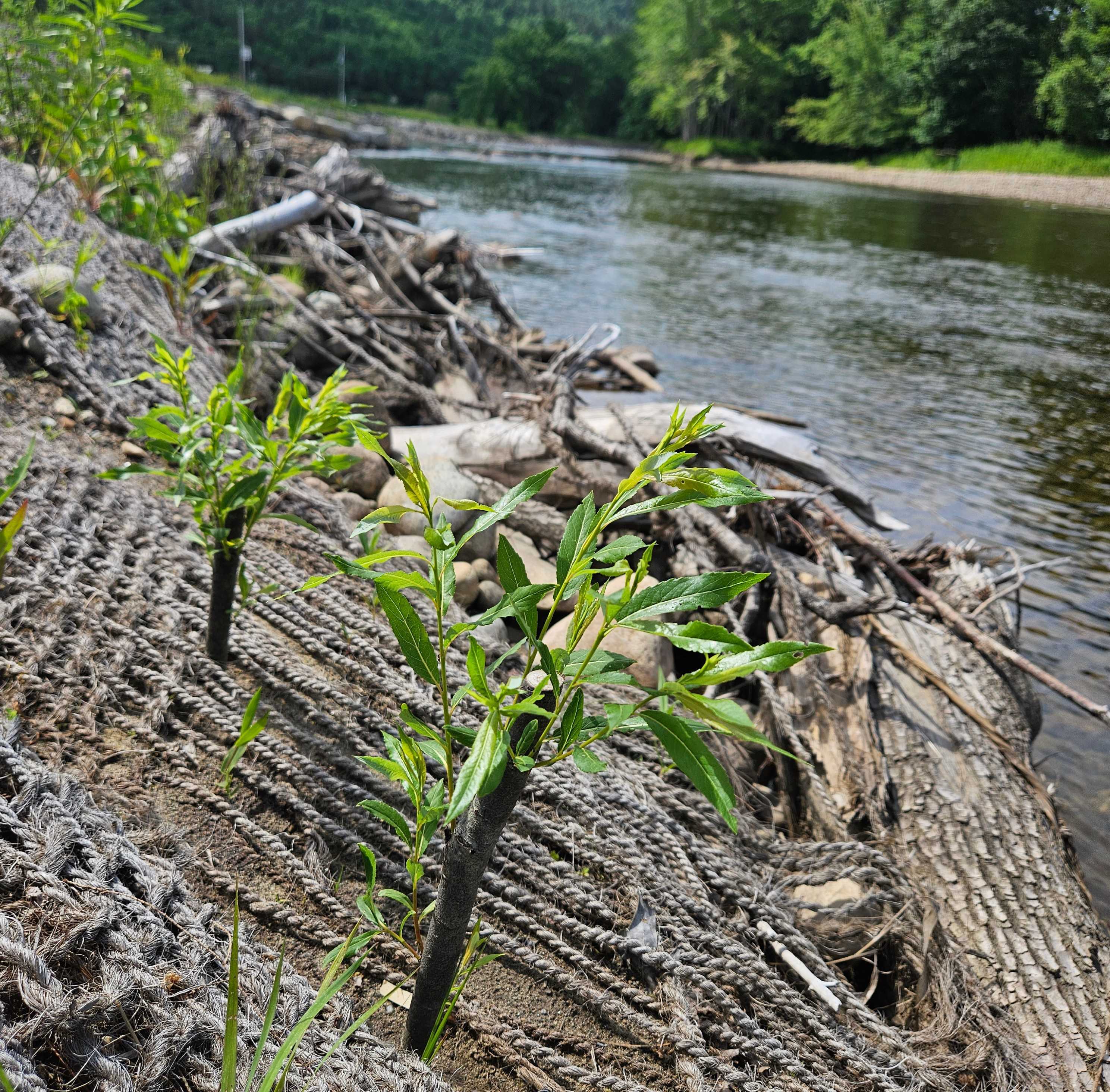
Native shrub willows can grow quickly and withstand a lot of disturbance. We plant them at most of our project sites to begin repairing the function of riparian ecosystems. Here, willow live stakes were installed at a site and the following year we found them vigorously sprouting.
New growth forests and old growth forests may both be full of trees, but they tell very different stories. A new growth forest is young, often growing back after logging, fire, or another disturbance. The trees are typically the same age and species, packed closely together as they race for sunlight. You'll find less diversity in plant and animal life, and the forest floor is usually more open with fewer fallen logs or layers of decaying wood. Old growth forests have had centuries to mature and balance themselves. They're full of towering trees of all ages, thick layers of moss, fallen logs slowly returning to soil, and a rich variety of species that depend on this complexity. Though there are still patches of old growth forest in the Adirondacks, the majority of the forests around us are new growth forests established since the heavy logging of the early 1900's. The forests in the Ausable River watershed serve as an excellent guide to inform AFC's revegetation work, and tell the story of recent restoration and natural regeneration.
Support our riparian ecosystem recovery work. Give with confidence today!

Establishing an initial ground cover of naturally occurring native species also gives disturbed sites a leg up in competing with invasive species outbreaks. While some non-native species do become naturalized, invasive species can spread rapidly, and cause harm to ecosystem health. In an invasive species outbreak, a species that has not historically evolved in relationship with the larger ecosystem function does not have the same checks and balances as a naturally occurring species. The native grasses, herbaceous, and woody plants that grow synergistically on the banks of rivers have evolved to establish root systems that physically hold the banks in place during annual high-water events and floods. Native birches and alders have nitrogen-fixing characteristics which enhance soil health and create suitable growing conditions for other species. Our riparian revegetation work aims to lay the foundation for native plant communities to establish and move through their ecological functions over time, and to reduce the pressure of quick-spreading invasive species that might be harmful to the health of the ecosystem and reduce the functionality of its plant systems.
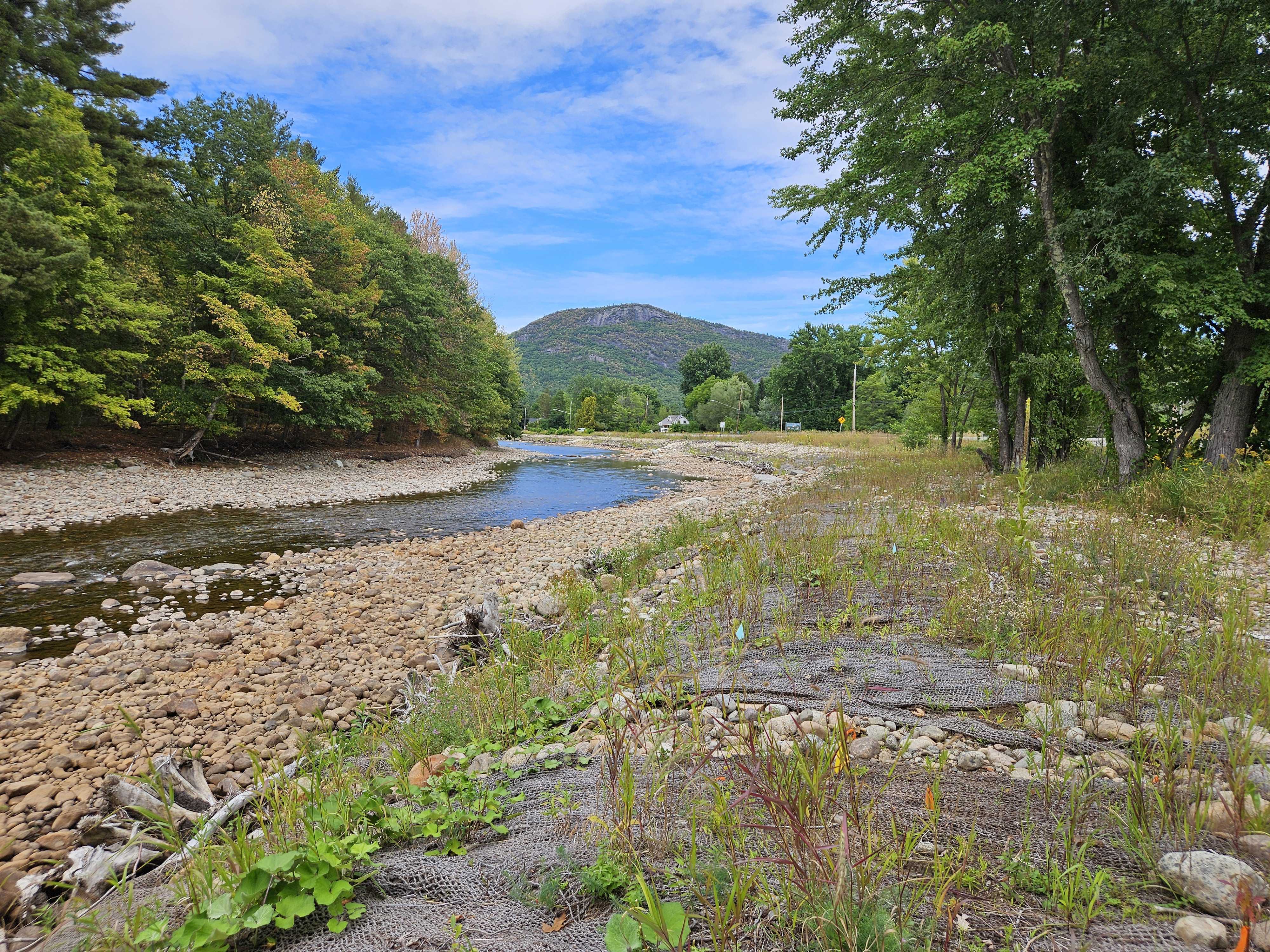
Grasses and herbaceous plants growing at a project area in Upper Jay. These faster growing plants start to support the bank while the shrubs and trees are still growing.
Why produce species declining from pests or disease?
There are many different approaches to restoration, planting, and nursery production. At AFC we believe that growing species currently under threat from pests, pathogens, or climate change is an important part of our work.
Across the Northeast, iconic trees are disappearing: American elms are being devastated by Dutch elm disease, eastern hemlocks are under attack from the hemlock woolly adelgid, and ash trees are rapidly declining because of the emerald ash borer. So, why do we still collect seeds and grow trees that might not survive to full maturity?
There are several reasons. First, even short-lived trees still provide valuable ecological benefits. A young elm or ash that lives only 10-15 years can still stabilize streambanks, improve soil health, and offer shade and habitat. When it eventually dies, that same tree becomes a source of dead wood, helping slow stream flow, create pools, and support aquatic life. Second, by growing and observing these species, we may encounter individuals with natural resistance to the pests or diseases threatening them. Propagating their offspring could one day help to establish more resilient populations. Finally, collecting and storing seeds from these trees contributes to long-term conservation efforts and seed banking initiatives, ensuring that the genetic diversity of these species isn't lost forever.
In short, producing these vulnerable species isn't just about what survives today. It's about giving them a chance for the future and maintaining the ecological roles they play in our landscapes while we search for long-term solutions.
Story by Kiana, Nursery Curator.
Sign-up for our e-newsletter to get weekly updates on the latest stories from the Ausable Freshwater Center.

